
Syracuse and the surrounding Onondaga County area
Masonry Contractors in Syracuse: Repointing, Chimneys, Brick and Walls
Find out whether the mortar coming out of your joints is a maintenance item or the start of losing the brick, and what a repair has to include to last. The answer turns on one thing almost nobody puts in a quote: whether the new mortar is softer than the brick around it. Tell us what the wall is doing and your town, and we will put you in front of licensed, insured contractors who settle that before they price it.
Request a Quote
Share a few details so we can confirm coverage and arrange the right next step.
Would you rather talk it through? Call (315) 640-3590, answered 24/7.
$100 off your first job
Credited by us on your first booked job.
- One credit per customer per property, on your first booked job.
- Valid through December 31, 2026.
Mention this offer when you book. Full terms.
Five jobs, sorted by what has actually failed
These split by what has failed, not by how much brick is involved, because the fix and the price are nothing alike. Soft, hollow or missing joints with sound brick is repointing. Brick faces flaking and popping off is unit replacement, and the joints are usually what took them. A crack stepping up from the corner of a window is steel rather than settlement, and filling it makes it worse. The chimney is its own job because it is the wettest masonry on the house, and anything at ground level is decided by drainage and frost instead of by the face you can see. The two commonest failures here even have different maps: soft brick tracks the pre-1940 housing, and rusting lintels track the 1940 to 1959 tracts. Each card opens with the one thing to look at, and on masonry that is usually visible from the sidewalk without anyone opening anything up.
Repointing and Mortar Joint Repair
Find out whether crumbling or missing mortar needs the joints raked out and refilled, and which mortar type belongs on the brick you actually have.
Start here if you can scrape mortar out of a joint with a key or a nail, or the joints have gone soft, hollow or missing.
About Repointing →Chimney Repair and Rebuilding
Work out whether a chimney needs its crown and top courses rebuilt, a rebuild from the roofline, or work at the footing, and what the state code requires either way.
Start here if the crown is cracked, the brick or mortar on the stack above the roof is failing, or the chimney is leaning or leaking at the roofline.
About Chimney Repair →Lintel Repair and Opening Repairs
Tell a rusting steel lintel apart from settlement, so the crack above your window, door or garage opening gets the trade it actually needs.
Start here if a crack steps diagonally up from the top corner of a window, door or garage opening, or there is a rust stain or a lifted course above one.
About Lintel Repair →Brick and Stone Replacement
Understand why brick faces are flaking or popping off, which units have to be cut out and replaced, and what has to change so the new ones do not go the same way.
Start here if brick faces are flaking, popping or crumbling away, or units are cracked, loose or missing.
About Brick Replacement →Retaining Walls, Steps and Foundation Masonry
Establish whether a leaning retaining wall, crumbling brick steps or a failing block or stone foundation wall needs rebuilding, and what has to change underneath so it stays put.
Start here if a retaining wall is leaning or bulging, brick or stone steps are breaking up, or a block or stone foundation wall is failing at grade.
About Retaining Walls and Steps →Not sure which one you need?
Describe what you are seeing and we will tell you what the job actually needs.
How a masonry job starts here
Three steps, and the first two happen before anybody prices anything. Most of what decides a masonry job is settled in those two.
Tell us what the wall is doing, and roughly when the house was built
Those two answers do most of the sorting. Powdering, hollow or missing joints is one job. Brick faces flaking and popping off is another, and it usually means the joints caused it. A crack stepping up from the top corner of a window is a third, and it is steel rather than settlement. The build year matters because it decides how soft the brick is, and the brick is what decides which mortar belongs on it.
Somebody establishes what is in the joints before pricing the wall
National Park Service Preservation Brief 2 sets the rule: new mortar has to be softer in compressive strength and more vapor permeable than the masonry units, and no harder than the mortar it replaces. So both have to be established first, from the ground where the house is plain enough and by lab analysis of a sample where it is not. Getting it wrong does not fail gently. It moves the damage off the joint, which can be raked out and refilled again, and onto the brick, which cannot.
A written scope that names the mortar, not just the price
New York already requires a home improvement contract to be in writing and to describe the work and the materials to be provided, including make, model number or other identifying information, with the right to cancel until midnight of the third business day after signing. So asking for the mortar type, the mix proportions and the joint depth on paper is not an awkward demand. It is asking for the description the statute already requires to be complete.
What makes this a local problem
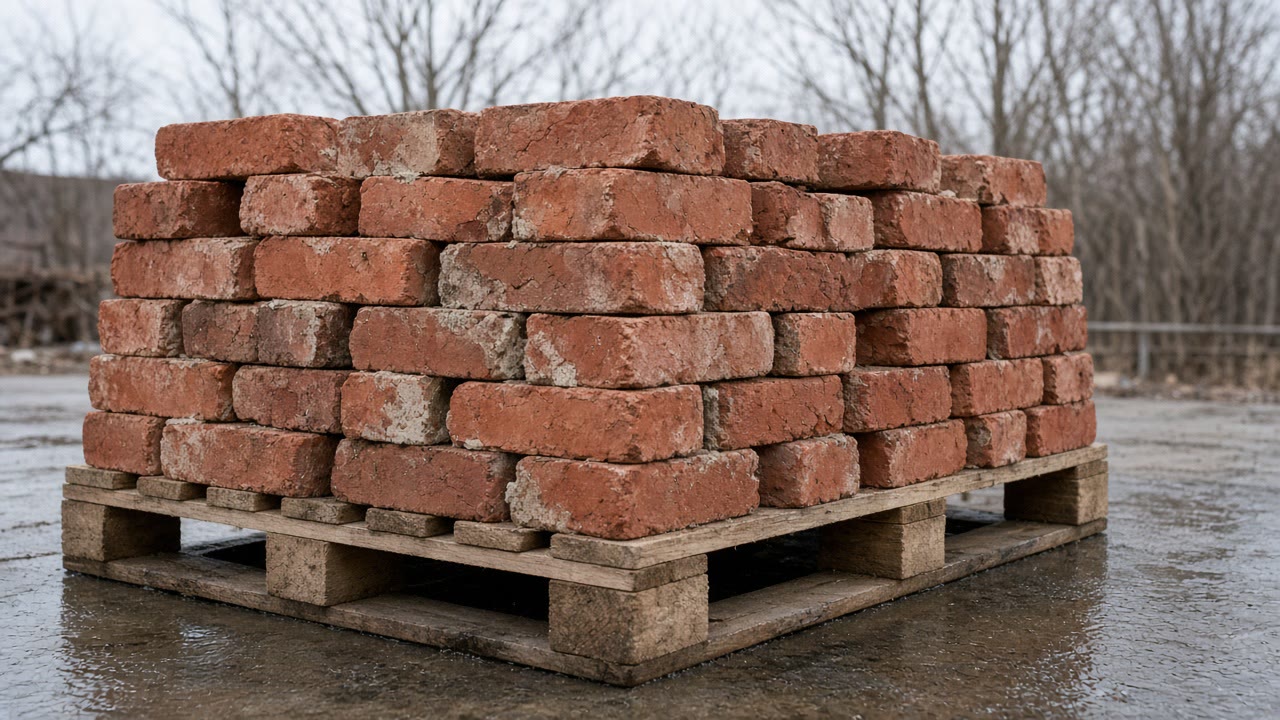
The City of Syracuse has 67,601 housing units with a median year of construction of 1948. Of those, 43.1 percent were built in 1939 or earlier, 66.4 percent in 1959 or earlier and 85.5 percent before 1980. Only 8.9 percent were built in the 1970s and the remainder, about 14.5 percent, dates from 1980 or later.
Source: US Census Bureau, American Community Survey 2020-2024 5-year estimates, table B25034 Year Structure Built and table B25035 Median Year Structure Built, accessed 2026-09-10
Onondaga County as a whole has 212,002 housing units with a median year of construction of 1964. Of those, 22.6 percent were built in 1939 or earlier, 44.6 percent in 1959 or earlier and 69.9 percent before 1980. The comparable national figures are a median of 1980, with 11.7 percent built in 1939 or earlier, 25.6 percent in 1959 or earlier and 49.7 percent before 1980.
Source: US Census Bureau, American Community Survey 2020-2024 5-year estimates, table B25034 Year Structure Built and table B25035 Median Year Structure Built, accessed 2026-09-10
Under the 1991 to 2020 climate normals for Syracuse, the daily minimum temperature falls to 32 degrees Fahrenheit or below on 129.5 days of a normal year, but the daily maximum stays below 32 degrees on only 45.7 days. The difference, about 84 days a year, is days on which the temperature crosses freezing in both directions rather than staying below it.
Source: NOAA National Centers for Environmental Information, 1991-2020 US Climate Normals, station USW00014771 Syracuse Hancock International Airport, accessed 2026-09-10
Broken down by month, the Syracuse normals put the freezing crossings at 11.9 days in January, 13.3 in February, 17.8 in March, 8.7 in April, 3.8 in October, 12.8 in November and 14.7 in December, with March the single worst month of the year. March also carries a normal 18.0 inches of snow and 2.95 inches of precipitation, and a normal mean temperature of 34.2 degrees Fahrenheit, so most of what falls in March is melting.
Source: NOAA National Centers for Environmental Information, 1991-2020 US Climate Normals, station USW00014771 Syracuse Hancock International Airport, accessed 2026-09-10
What to ask anyone who quotes for repointing
Ask which mortar type they will use, and how they know it is softer than your brick. You get one of two answers and both are worth having: a letter, which means somebody has looked at the wall, or a shrug, which is itself the finding.
Mortar is meant to be the weak part of a wall. Preservation Brief 2 sets four criteria for a repointing mortar and two of them are invisible once the joint is tooled: the new mortar must be softer in compressive strength and more vapor permeable than the brick around it, and no harder than the mortar it replaces. Get that right and frost works the joint, which can be raked out and refilled again. Get it backwards and the stresses in the wall are relieved through the brick instead, while moisture that should have left through the joint leaves through the brick face and lifts the fired skin off it. Mortar can be replaced indefinitely. Brick cannot.
The letters are worth knowing because you can say them out loud. The current standard defines four: Type M at 2,500 psi, Type S at 1,800, Type N at 750 and Type O at 350. The Brick Industry Association recommends Type N for normal use including most veneer, which is right for a modern house and is what turns up when nobody asks. Preservation Brief 2 names the instinct behind that directly: it is a common error to assume hardness or high strength is a measure of appropriateness, particularly for lime-based historic mortars.
Specifying it properly costs almost nothing. A national cost guide puts labor at roughly 80 to 90 percent of a repointing job and the mortar itself at 10 to 20 percent, so naming the right type saves a contractor nothing worth having, and refusing to name it saves them nothing either. That is what makes it a fair question rather than an awkward one.
What is different about a masonry job here
We tell you which of the two failures is likely on your street
Soft brick needing a soft mortar and rusting steel over openings fail on maps that barely overlap. Ranked by housing built in 1939 or earlier, this county runs from 54.3 percent in Skaneateles village down to 3.2 percent in the Town of Clay. Ranked by the 1940 to 1959 era instead, when steel angle lintels became standard over openings, the order changes completely and Skaneateles village drops near the bottom. So the useful first answer is which of the two you are probably looking at, not a general story about frost.
The half of a repointing quote that nobody names
Every mason will match the color, the sand and the joint profile, and the local field advertises exactly that. Strength and permeability are the other two criteria in the federal guidance, they are the ones that decide whether the brick is still there in ten years, and neither can be seen in a finished joint. A homeowner who does not ask never finds out. Ask for the letter, then ask for it in the contract.
We say when the crack you are looking at can wait
Fine cracking in mortar with nothing loose is a watch item, and the test in the National Park Service guidance costs nothing: mark each end with a pencil, write the date beside it, look again after a season change. A crack that widens in cold weather and narrows in hot is thermal, and the guidance says an active crack wants a flexible sealant while an inactive one may simply be pointed. What cannot wait is short and specific: a crack stepping up from the top corner of an opening with a rust stain beside it, because rust scale can occupy up to ten times the volume of the metal it came from and sealing the crack keeps the water in.
The season is a real constraint, not a scheduling excuse
Preservation Brief 2 puts the working range at wall temperatures between 40 and 95 degrees Fahrenheit and says antifreeze compounds are not recommended. Normal daily minima here stay below 40 degrees from October through April, and March then delivers 17.8 freezing crossings, more than any other month, while the 92 inches of snow that fell between December and February melts into whatever is open. So the honest deadline for closing a wall up is late autumn, and a shaded north elevation is worth booking for the middle of the season rather than either edge of it.
Coverage across Syracuse and the surrounding Onondaga County area
What people ask before they call about brickwork
Can hairline cracks in the mortar wait?
Usually, yes. Fine cracking in the joints with nothing loose, nothing missing and no brick out of line is a watch item rather than a repair. The test in the National Park Service guidance costs nothing: mark each end of the crack with a pencil, write the date beside it and look again after a season change. A crack that widens in cold weather and narrows in hot is thermal and moving, and the guidance is that an active crack wants a flexible sealant while an inactive one may simply be pointed. If it has not moved and it is not letting water in, it can wait, and we would rather say that on the phone than book you a wall.
There is white powder on my brick. Is that serious?
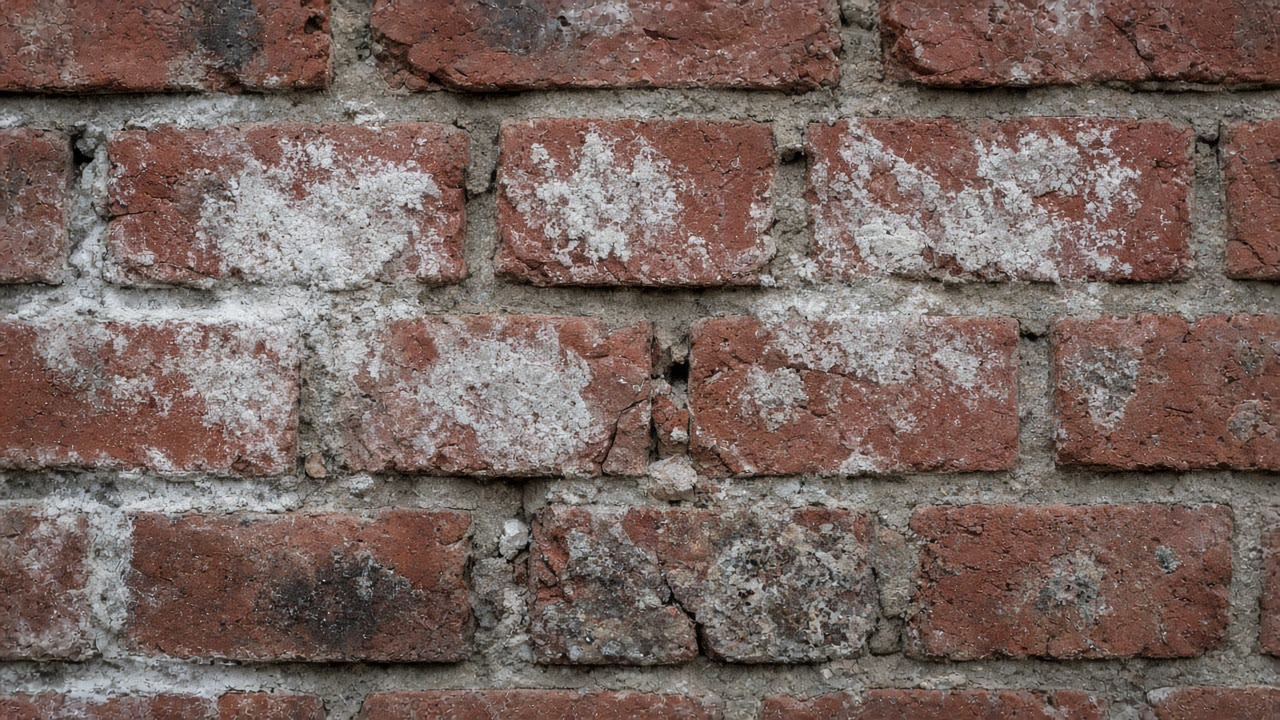
That is efflorescence, and on its own it is not a fault in the wall. It is soluble salt left on the surface as water evaporates out of the masonry, and Preservation Brief 2 says salts left on the surface are usually relatively harmless in themselves. What it does tell you is that moisture is moving through the wall, so it is worth finding where the water is getting in, a blocked gutter or a cracked chimney crown being the usual answers. Brushing it off and dealing with the water is a legitimate outcome. It is not a reason to replace brick or repoint an elevation.
Is this actually urgent, or is somebody selling me a job?
Fair question, and there is a test you can run yourself. Take a key or an old screwdriver to a joint. If the point skids off, you have time. If you can rake the mortar out to the depth of your fingernail, water is already getting into the wall, and a normal year here crosses freezing about 84 times, so a joint left open in October is worked roughly eighty times before spring. What is genuinely pressing is a short list: a step crack from the corner of an opening with a rust stain, a chimney out of plumb, a wall that has bulged or leaned. Almost everything else is a decision about which year you spend the money, not whether.
How do I know a mason is using the right mortar?
Ask for the letter, then ask for it in writing. The current standard defines four types, M at 2,500 psi, S at 1,800, N at 750 and O at 350, and the rule in Preservation Brief 2 is that new mortar must be softer in compressive strength and more vapor permeable than the brick and no harder than the mortar it replaces. New York already requires a home improvement contract to describe the work and the materials to be provided, so putting the mortar type, the mix proportions and the joint depth into the contract is asking for a description the law already requires to be complete. Somebody who will name a type on the doorstep but not on paper has answered a different question.
Do I need a licensed masonry contractor in New York?
There is no state masonry license for anyone to hold. New York's Department of State says the state does not license home improvement contractors, and that where licensing exists it is run by particular counties and cities, none of which is Onondaga County or the City of Syracuse. What you can actually verify is more useful: a certificate of insurance naming you, workers compensation and disability coverage or a valid exemption, and a written contract carrying the three business day cancellation notice. Treat a claim of state licensing as a reason to look harder rather than as a credential.
Is there a wrong time of year to have this done?
Deep winter, and that is the guidance rather than a diary preference. Preservation Brief 2 puts the working range at wall temperatures between 40 and 95 degrees Fahrenheit, says antifreeze compounds are not recommended, and prefers warming the sand and water and protecting finished work from freezing. Normal daily minimum temperatures here stay below 40 degrees from October through April, so the reliable season runs from about mid April to early November. The edges of it depend on the elevation: a shaded north or east wall in November can sit under 40 degrees all day while the forecast says otherwise, which is why a spring start on that wall beats a November one.
Tell us what you are seeing
Tell us what you have and we will tell you where you stand.