
Onondaga County
Masonry Contractors in Clay: A Modern Veneer Problem
A quote that opens on historic mortar compatibility is not describing a Clay house, and you are entitled to say so. Clay sits at the bottom of both of the county's masonry age rankings, 3.2 percent built before 1940 and 12.8 percent in the steel lintel decades, so what fails here is the drainage path through a modern veneer wall.
Request a quote in Clay
Share a few details so we can confirm coverage and arrange the right next step.
Would you rather talk it through? Call (315) 640-3590, answered 24/7.
$100 off your first job
Credited by us on your first booked job.
- One credit per customer per property, on your first booked job.
- Valid through December 31, 2026.
Mention this offer when you book. Full terms.
Last on both of the county's age rankings

The Town of Clay has 26,282 housing units, the largest count of any town in Onondaga County, with a median year of construction of 1978. Only 3.2 percent were built in 1939 or earlier and only 16.0 percent in 1959 or earlier, the lowest figures in the county. The Radisson census place inside Clay has a median of 1990 and a pre-1940 share of 4.2 percent. The Town of Cicero has 13,584 units, a median of 1980, a pre-1940 share of 6.9 percent and a pre-1960 share of 26.6 percent.
Source: US Census Bureau, American Community Survey 2020-2024 5-year estimates, table B25034 Year Structure Built and table B25035 Median Year Structure Built, accessed 2026-09-10
Section R703.8.6 of the Residential Code of New York State requires weepholes in the outside wythe of masonry walls at a maximum spacing of 33 inches on center, not less than three sixteenths of an inch in diameter, located immediately above the flashing. Section R703.8.4.1.1 requires additional metal ties around wall openings greater than 16 inches in either dimension, spaced not more than three feet on center around the perimeter of the opening and placed within 12 inches of it.
Source: 2020 Residential Code of New York State, Section R703, Exterior Covering, via UpCodes, accessed 2026-09-10
Section R1003.9.1 of the Residential Code of New York State requires masonry chimneys to have a concrete, metal or stone cap, a drip edge and a caulked bond break around any flue liners, in accordance with ASTM C1283, and requires the cap to be sloped to shed water. Section R1003.9.2 sets requirements for spark arrestors, including a net free area of not less than four times the net free area of the flue outlet, and Section R1003.9.3 sets the same four times rule for the net free area under a rain cap.
Source: 2020 Residential Code of New York State, Chapter 10, Chimneys and Fireplaces, via UpCodes, accessed 2026-09-10
Count the holes above your windows
Look along the brick course over an opening, then send the address. If there are no weepholes there, that is worth a conversation.
What actually fails on a Clay brick veneer
Clay is the largest town in the county by housing count, 26,282 units, and among the newest: a median build year of 1978, only 3.2 percent built in 1939 or earlier and only 16.0 percent before 1960, both the lowest figures in Onondaga County, with the Radisson Census place inside the town at a median of 1990. Clay is also last on the 1940 to 1959 ranking at 12.8 percent. It is the one place in this metro where neither of the two classic mechanisms is the likely answer, and pretending otherwise would be selling a story rather than diagnosing a wall. What does go wrong on a modern brick veneer is the drainage path, and two parts of it are visible without a ladder. The state residential code requires weepholes in the outer wythe at a maximum of 33 inches on center, at least three sixteenths of an inch across, immediately above the flashing. So look along the brick course over a window or door, and along the course just above the foundation: small open holes at roughly arm-span spacing mean water that gets in has a way out. A continuous unbroken bed joint means it does not, and a repointing job that fills the weepholes leaves the wall worse than it found it. The second is the top of the chimney, where the code describes a sloped cap with a drip edge and a caulked break around the flue liner, not the flat mortar wash most houses actually have up there. There is no National Register listing anywhere in Clay, so nothing needs historic review and no state homeowner credit applies on that basis. Whether a repointing job needs a permit is the Town of Clay's own call, so confirm it at the town office rather than assuming.
Areas within Clay: Radisson
What we take on across Clay's brick veneer
Repointing and Mortar Joint Repair
Find out whether crumbling or missing mortar needs the joints raked out and refilled, and which mortar type belongs on the brick you actually have.
Repointing in Clay →Chimney Repair and Rebuilding
Work out whether a chimney needs its crown and top courses rebuilt, a rebuild from the roofline, or work at the footing, and what the state code requires either way.
Chimney Repair in Clay →Lintel Repair and Opening Repairs
Tell a rusting steel lintel apart from settlement, so the crack above your window, door or garage opening gets the trade it actually needs.
Lintel Repair in Clay →Brick and Stone Replacement
Understand why brick faces are flaking or popping off, which units have to be cut out and replaced, and what has to change so the new ones do not go the same way.
Brick Replacement in Clay →Retaining Walls, Steps and Foundation Masonry
Establish whether a leaning retaining wall, crumbling brick steps or a failing block or stone foundation wall needs rebuilding, and what has to change underneath so it stays put.
Retaining Walls and Steps in Clay →Get a straight answer on your Clay wall
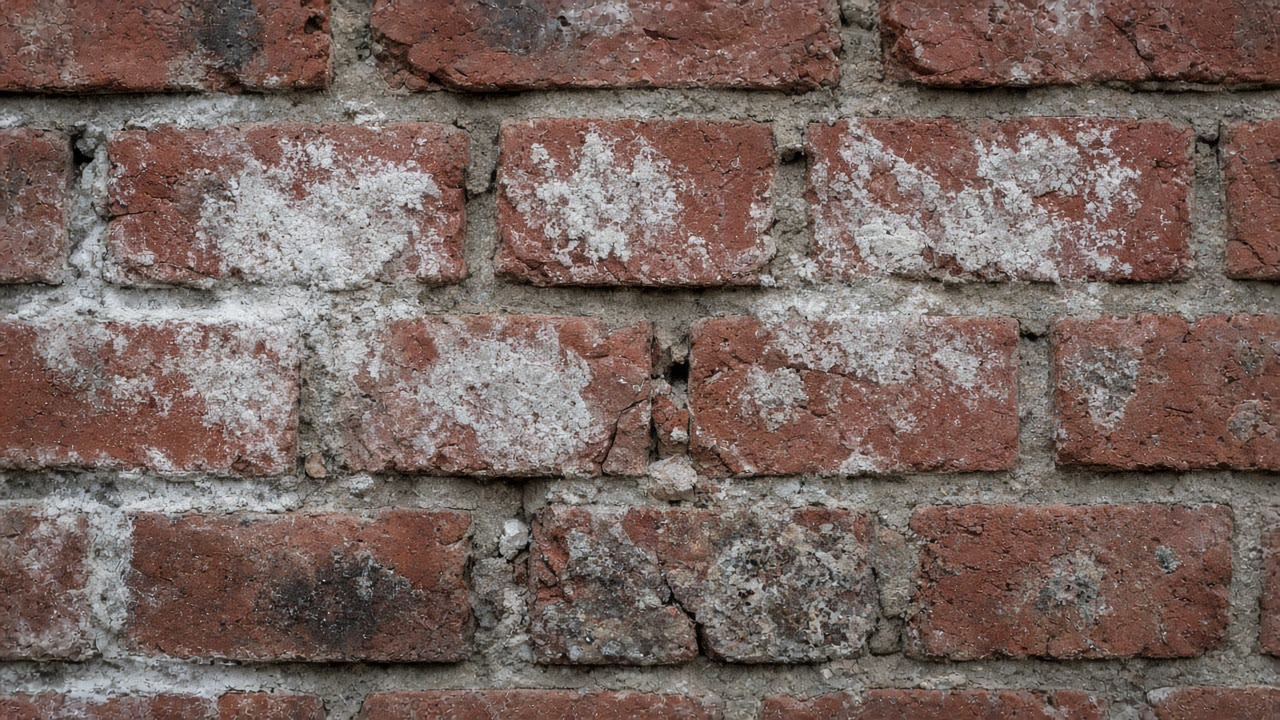
Cracked joints, white powder, a stoop pulling away, a split chimney crown: describe it with an address. If it needs nothing doing, you will hear that.