
Onondaga County
Masonry Contractors for East Syracuse's Village Brick
The mortar mix is the whole decision on a village street here, and you can have it named in writing before anyone loads a trowel. East Syracuse is 54.0 percent pre-1940 and 80.4 percent pre-1960, the oldest combination in Onondaga County, with no National Register listing anywhere in it.
Request a quote in East Syracuse
Share a few details so we can confirm coverage and arrange the right next step.
Would you rather talk it through? Call (315) 640-3590, answered 24/7.
$100 off your first job
Credited by us on your first booked job.
- One credit per customer per property, on your first booked job.
- Valid through December 31, 2026.
Mention this offer when you book. Full terms.
The county's oldest housing, with nothing listed on it
East Syracuse village has 1,464 housing units and a median year of construction reported by the Census as 1938 or earlier, the bottom of the published range. Of its units, 54.0 percent were built in 1939 or earlier, 80.4 percent in 1959 or earlier and 89.8 percent before 1980. Only 2.7 percent were built in the 1970s and about 10 percent date from 1980 or later.
Source: US Census Bureau, American Community Survey 2020-2024 5-year estimates, table B25034 Year Structure Built and table B25035 Median Year Structure Built, accessed 2026-09-10
Preservation Brief 2 records that masonry cement is a preblended bagged mortar mix commonly found at hardware and home repair stores, introduced in the 1930s to hasten and simplify masons' work. It may contain hydrated lime but it always contains a large amount of portland cement as well as ground limestone and other workability agents including air-entraining agents. Because masonry cements are not required to contain hydrated lime, and generally do not contain lime, the Brief states that they produce high strength mortars that can damage historic masonry, and that for this reason they generally are not recommended for use on historic masonry buildings.
Source: National Park Service, Technical Preservation Services, Preservation Brief 2: Repointing Mortar Joints in Historic Masonry Buildings, by Robert C. Mack, FAIA, and John P. Speweik, 1998, accessed 2026-09-10
Queried for Onondaga County, the National Park Service's National Register points and polygons return 166 records, and none of them is located at Clay, East Syracuse, North Syracuse, DeWitt or Salina. Those five have no National Register listing of any kind in the federal geospatial records: no district, no individual building, no site and no structure.
Source: National Park Service, Cultural Resources geospatial data, National Register of Historic Places points and polygons map service, queried for Onondaga County, New York, accessed 2026-09-10
Old village brick, or something later?
Send the address and say what the joints are doing. What you have decides which mortar belongs in the contract.
Site-mixed or out of a bag: the East Syracuse question
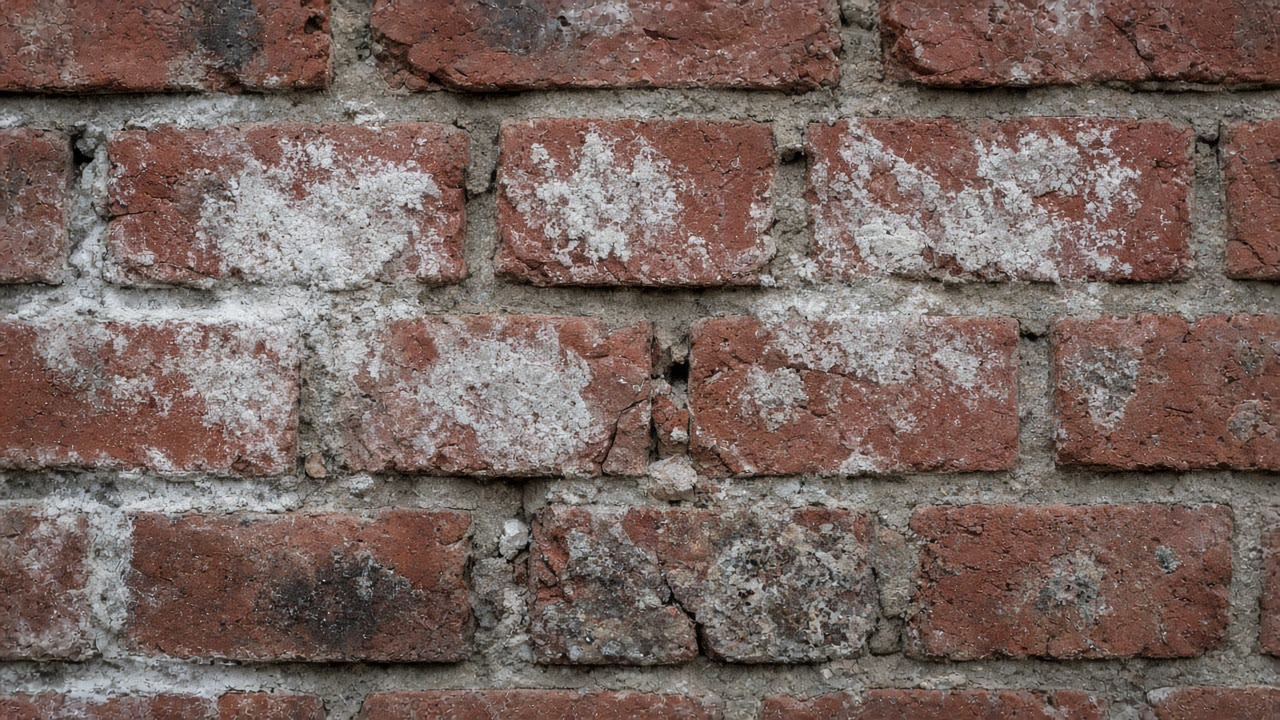
East Syracuse village runs its own code enforcement counter, separate from the town around it, so confirm which office the address answers to rather than assuming a neighbor's experience transfers. What makes this village unusual is the fabric. Of its 1,464 housing units, 54.0 percent were built in 1939 or earlier and 80.4 percent in 1959 or earlier, with only 2.7 percent from the 1970s, so four houses in five predate 1960 and the brick is old enough to be softer than a modern bagged mortar. That is the real risk on these streets. Masonry cement, the preblended bag on the shelf at any hardware store, always carries a large amount of portland cement and generally no lime at all, and the National Park Service says plainly that it produces high strength mortars which can damage historic masonry and generally is not recommended for use on it. A bag like that looks fine for three winters and then shows up as brick faces coming away beside crisp new joints. So the cheapest and most revealing question you can ask here is whether the mortar will be mixed on site from cement, lime and sand to a named type, or poured out of a premix. The other thing worth knowing is a negative, and it saves wasted effort: the federal National Register records return 166 entries for Onondaga County and not one of them is at East Syracuse, so there is no district review to schedule around and no contributing-building route into the state's 20 percent homeowner credit. Nobody here should be applying for one.
Masonry we take on across East Syracuse
Repointing and Mortar Joint Repair
Find out whether crumbling or missing mortar needs the joints raked out and refilled, and which mortar type belongs on the brick you actually have.
Repointing in East Syracuse →Chimney Repair and Rebuilding
Work out whether a chimney needs its crown and top courses rebuilt, a rebuild from the roofline, or work at the footing, and what the state code requires either way.
Chimney Repair in East Syracuse →Lintel Repair and Opening Repairs
Tell a rusting steel lintel apart from settlement, so the crack above your window, door or garage opening gets the trade it actually needs.
Lintel Repair in East Syracuse →Brick and Stone Replacement
Understand why brick faces are flaking or popping off, which units have to be cut out and replaced, and what has to change so the new ones do not go the same way.
Brick Replacement in East Syracuse →Retaining Walls, Steps and Foundation Masonry
Establish whether a leaning retaining wall, crumbling brick steps or a failing block or stone foundation wall needs rebuilding, and what has to change underneath so it stays put.
Retaining Walls and Steps in East Syracuse →Get a mortar type named for your East Syracuse wall
Mortar you can pick out with a screwdriver, flaking brick faces, a chimney shedding at the top: describe it with an address, no obligation.