
What Mortar Belongs on Old Syracuse Brick
Softer mortar than your brick, never harder. National Park Service Preservation Brief 2 states the rule directly: repointing mortar should be more vapor permeable and softer in compressive strength than the masonry units around it, because the joint is the part of the wall that is meant to give way. So the question worth asking anyone who quotes for repointing is which mortar type they will use, by letter, and how they know it is softer than your brick.
Already know you need someone out? Call (315) 640-3590, answered 24/7.
What a hard mortar does to soft brick, in order
The new joint goes in and looks right
Year oneColor, texture and joint profile can all be matched beautifully by a mortar that is far too strong. Nothing on the surface of a finished joint tells you which mortar was used.
The wall moves and the joint will not
The stress halfPreservation Brief 2: stress from expansion, contraction, moisture migration or settlement has to be relieved somewhere, and a mortar stronger than the units relieves it through the units.
Moisture is pushed out through the brick face
The permeability halfA dense portland-heavy joint is less permeable than soft brick, so water that used to leave through the joint leaves through the brick instead, depositing salts under its fired skin.
The salts crystallize and the face pops off
What you finally seeThe National Park Service publishes a photograph of precisely this failure, captioned as water pressure eventually popping the surface off the bricks.
It is now a brick job, not a mortar job
The billMortar can be raked out and replaced as often as a wall needs it. A spalled brick face cannot be put back.
National Park Service Preservation Brief 2, Repointing Mortar Joints in Historic Masonry Buildings, and the National Park Service page on common problems with brick masonry.
Why the joint is supposed to be the weak part of the wall
The mortar is the part of a brick wall you are allowed to lose, and that is deliberate. National Park Service Preservation Brief 2 sets four criteria for a repointing mortar, and two of them never show on a finished joint: the new mortar has to be more vapor permeable and softer, measured in compressive strength, than the brick, and no harder and no less permeable than the mortar it replaces. The reason is where stress goes. A wall moves with temperature, with moisture and with settlement, and that movement has to be absorbed somewhere. When the mortar is the softer material it absorbs it, and the worst outcome is a hairline crack in a joint, which can be raked out and repointed. When the mortar is stronger than the brick, the Brief says the stress is relieved through the masonry units instead, and the result is cracking and spalling that cannot be repaired easily. That is the whole argument in one line: mortar can be replaced as many times as a wall needs it, and a brick face cannot be put back.
The second way a hard joint does damage: it moves the water
Stress is only half of it. Historically a mortar joint worked as a bedding material, closer to an expansion joint than to glue, and moisture in the wall left through the joints rather than through the masonry units. High lime mortars are more permeable than denser cement mortars, so when a joint is replaced with something dense the water has to find another exit, and the only one left is the face of the brick. As that water evaporates it deposits soluble salts, and salt crystallization within a masonry unit creates pressure that can spall or delaminate the outer surface. The National Park Service publishes a photograph of the finished result and captions it plainly: hard portland cement mortar less permeable than the soft bricks, moisture unable to evaporate through the joint that was supposed to be sacrificial, and water pressure that eventually popped the surface off the bricks. Its page on common problems with brick masonry is blunter still, and worth quoting to anyone who thinks this is a detail. More damage is done to historic brick buildings with improper pointing than with almost any other treatment, and the damage is not only cosmetic.
The white powder on your brick is a symptom, not a fault
Efflorescence, the chalky white bloom that shows up on brick and on joints, is the wall telling you that water is moving through it and evaporating on the outside. That is information rather than a defect. Preservation Brief 2 is specific about the difference: soluble salts deposited on the surface as efflorescence are usually relatively harmless, and it is subflorescence, the same salts crystallizing below the surface inside the unit, that creates the pressure which pops a brick face off. So a bloom you can brush away does not mean your wall needs work, and it very much does not mean your wall needs sealing. What it is worth doing is finding where the water is arriving from, because a gutter joint, a downspout outlet, a missing chimney cap or an open joint above the affected area explains most cases. If the powder keeps returning to the same patch after a dry spell, that patch is the one worth a closer look.
Which mortar type, and what the letters actually mean
Mortar types are letters, and you should be able to say the letter you want out loud. Preservation Brief 2 lists them in decreasing order of approximate strength: Type M at 2,500 psi, Type S at 1,800 psi, Type N at 750 psi, Type O at 350 psi and Type K at 75 psi, the letters taken from the words MASON WORK using every other letter. Proportions are always given in the order cement, lime, sand, so a Type O is one to two to nine. There is one wrinkle you should hear from us rather than discover in an argument: the Brief lists five types including K, while the Brick Industry Association, reporting current ASTM C270, lists four, M, S, N and O, with K no longer among them. Both are accurate as published and we have left the discrepancy visible instead of tidying it away. For ordinary modern brickwork the Brick Industry Association recommends Type N for normal use, including most veneer. For soft old brick the direction of travel is downward from there, toward O, and where exactly it lands is a decision for whoever has looked at your actual wall.
Why the bag from the hardware store is the wrong bag
The preblended mix sold as masonry cement is the easiest way to get this wrong, and it sits on the shelf of every hardware store. Preservation Brief 2 records what it is: a product introduced in the 1930s to hasten and simplify a mason's work, containing a large amount of portland cement along with ground limestone and other workability agents including air-entraining agents. Because masonry cements are not required to contain hydrated lime and generally do not contain it, the Brief states that they produce high strength mortars that can damage historic masonry, and that they are generally not recommended for use on historic masonry buildings. This is not a fussy preservation preference. It is the same physics as the rest of this page, arriving in a bag that is quick to mix and looks entirely normal in a struck joint. Ask what is going into the mixer, and ask whether the lime is coming out of a bag of hydrated lime or is being taken on trust.
Matching the color is the half of the job that everybody does
Every mason in this market will offer to match the color, the texture and the joint profile, and they are right to offer it. Preservation Brief 2 explains why it works: the most useful thing a laboratory analysis of an old mortar produces is identification of the sand by gradation and color, because sand is the largest ingredient by volume, and that is what allows color and texture to be matched with some accuracy. The same Brief warns against writing a specification from laboratory analysis alone, because several things that decide performance cannot be recovered in a laboratory, among them the original water content, the rate of curing, the weather during construction and the condition of the sand. So appearance is a solved problem, and it is the visible half. Strength and permeability are the invisible half, they decide whether your brick is still there in twenty years, and almost nobody in this market advertises them at all. That asymmetry is the reason this page exists.
When you can leave it alone, and how to check with a screwdriver
Plenty of old joints look worse than they are, and the check costs nothing but a screwdriver. Preservation Brief 2 has old mortar cut back to a minimum of two to two and a half times the width of the joint, which for most brick joints means approximately half an inch to one inch, with any loose or disintegrated mortar beyond that depth also removed. Turn that around and you have a homeowner's test. Press the point of a screwdriver into a joint and drag it. If the point skates off and nothing comes away, the joint is doing its job, and hairline cracking with nothing loose can genuinely wait. If you can pick mortar out to something like half an inch with hand pressure, that section has already failed and water is getting behind it. This is a rough check on a patch you can reach, not a verdict on a wall, and it will tell you nothing about the chimney or the parapet you cannot get to. What it will tell you is whether you are looking at a job for this year or a job to keep an eye on, and that is most of what people want to know before they call anyone.
Why this bites harder in the city than out in Clay
The mortar mistake only matters where the brick is soft, and soft means old. The City of Syracuse has 67,601 housing units at a median year of construction of 1948, with 43.1 percent built in 1939 or earlier and 85.5 percent before 1980. That is a very large body of exactly the masonry a hard joint ruins. The Town of Clay is the mirror image: 26,282 units, a median year of 1978, only 3.2 percent built in 1939 or earlier and only 16.0 percent before 1960, with Cicero close behind it. In those towns the likely masonry problems are modern brick veneer details rather than mortar compatibility, and telling you otherwise would be selling you something. One honest caveat runs the other way as well: Preservation Brief 2 notes that many buildings put up in the first half of the twentieth century are now historic and may have been built with portland cement mortar originally, so old does not automatically mean lime. The question is still what is actually in your wall, and the answer still comes from looking at it. If you want that done, send us the address and what you are seeing.
Sources used in this guide
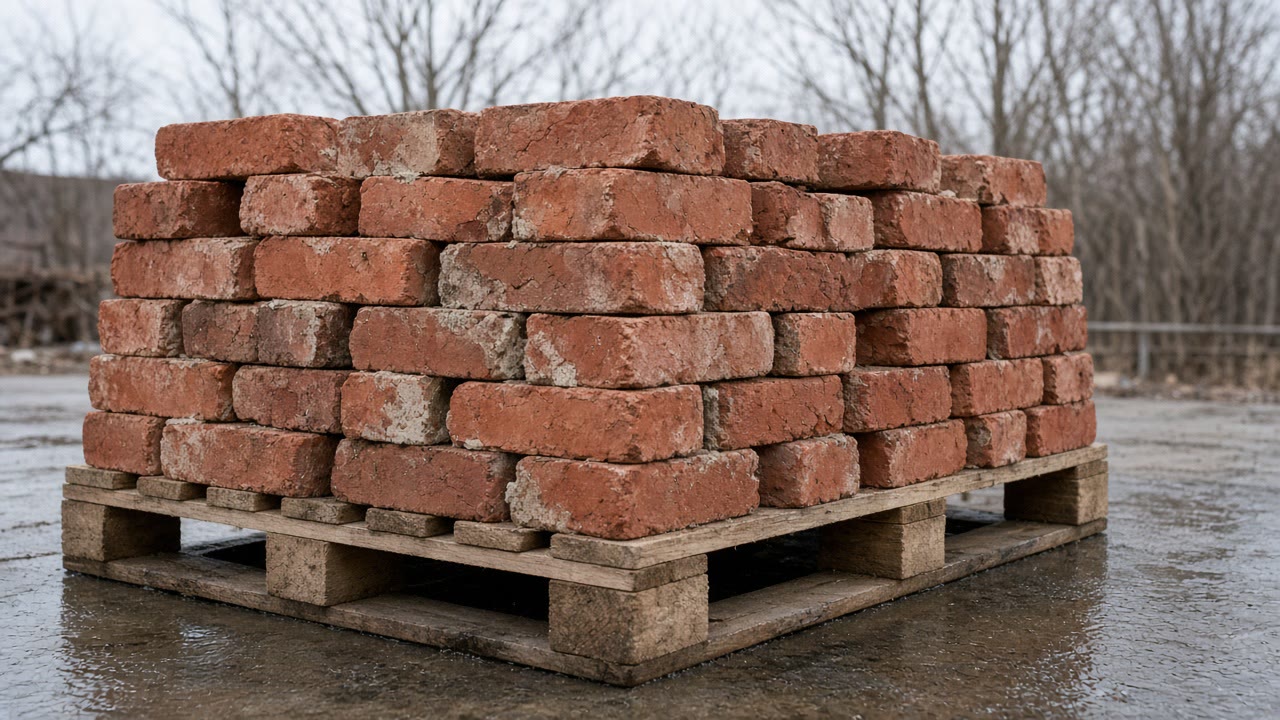
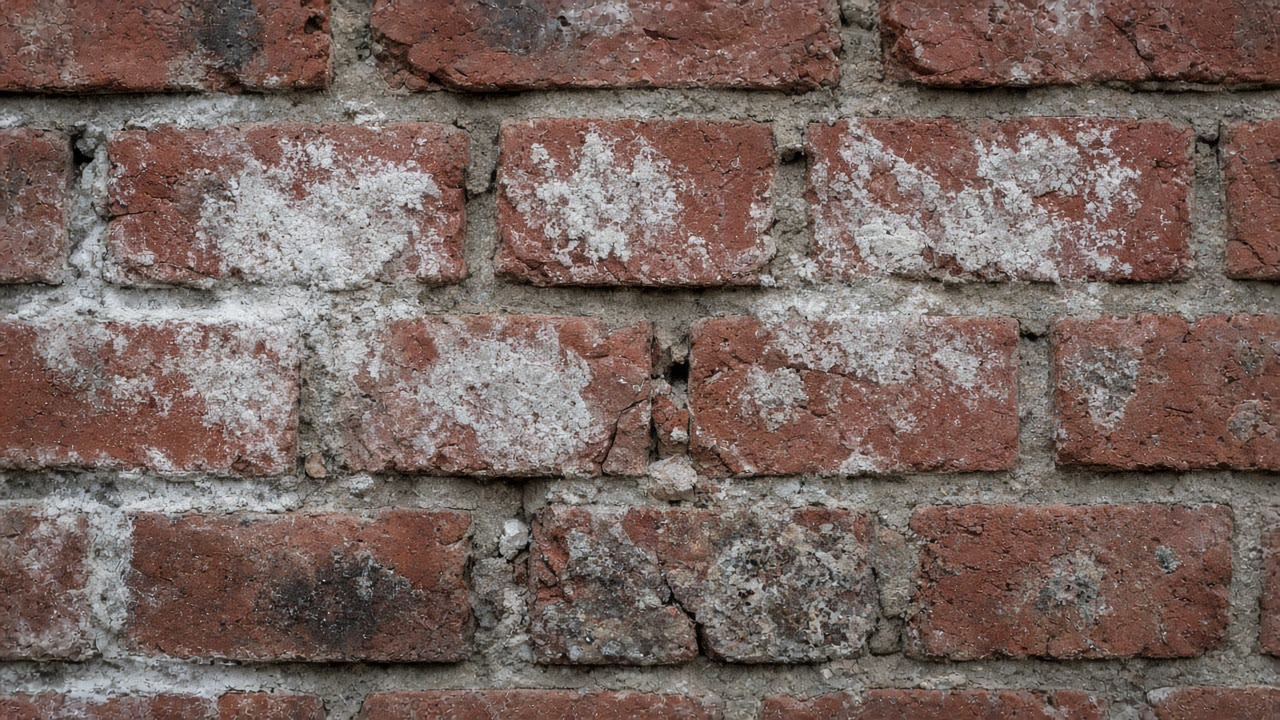
National Park Service Preservation Brief 2 sets four criteria a repointing mortar must meet, and two of them are about physics rather than looks. The new mortar must have greater vapor permeability and be softer, measured in compressive strength, than the masonry units. It must also be as vapor permeable and as soft or softer, measured in compressive strength, than the historic mortar it replaces. The Brief states the rule directly: mortars for repointing should be softer or more permeable than the masonry units and no harder or more impermeable than the historic mortar, to prevent damage to the masonry units.
Source: National Park Service, Technical Preservation Services, Preservation Brief 2: Repointing Mortar Joints in Historic Masonry Buildings, by Robert C. Mack, FAIA, and John P. Speweik, 1998, accessed 2026-09-10
Preservation Brief 2 explains the mechanism. Stresses within a wall caused by expansion, contraction, moisture migration or settlement must be accommodated somewhere, and in a masonry wall those stresses should be relieved by the mortar rather than by the masonry units. A mortar that is stronger in compressive strength than the masonry units will not give, so the stresses are relieved through the masonry units instead, resulting in permanent damage such as cracking and spalling that cannot be repaired easily. The Brief adds that where stress instead breaks the bond between mortar and unit, letting water into the resulting hairline cracks, that is easier to correct in the joint by repointing than if the break occurs in the masonry units.
Source: National Park Service, Technical Preservation Services, Preservation Brief 2: Repointing Mortar Joints in Historic Masonry Buildings, by Robert C. Mack, FAIA, and John P. Speweik, 1998, accessed 2026-09-10
Preservation Brief 2 sets out the second route to damage, which is moisture rather than stress. Historically mortar acted as a bedding material, not unlike an expansion joint, rather than as a glue, and moisture was able to migrate out through the mortar joints rather than through the masonry units. High lime mortars are more permeable than denser cement mortars. When moisture evaporates from masonry it deposits soluble salts either on the surface as efflorescence or below the surface as subflorescence. Salts left on the surface are usually relatively harmless, but salt crystallization within a masonry unit creates pressure that can cause parts of the outer surface to spall off or delaminate. The Brief concludes that if the mortar does not permit moisture or moisture vapor to migrate out of the wall and evaporate, the result will be damage to the masonry units.
Source: National Park Service, Technical Preservation Services, Preservation Brief 2: Repointing Mortar Joints in Historic Masonry Buildings, by Robert C. Mack, FAIA, and John P. Speweik, 1998, accessed 2026-09-10
Preservation Brief 2 publishes a National Park Service photograph of the failure with this caption: the use of hard portland cement mortar that is less permeable than the soft bricks has resulted in severe damage to this brick wall, moisture trapped in the wall was unable to evaporate through the mortar which is intended to be sacrificial and thus protect the bricks, and as a result the moisture remained in the walls until water pressure eventually popped the surface off the bricks.
Source: National Park Service, Technical Preservation Services, Preservation Brief 2: Repointing Mortar Joints in Historic Masonry Buildings, by Robert C. Mack, FAIA, and John P. Speweik, 1998, accessed 2026-09-10
The National Park Service page on common problems with brick masonry states that all too often more damage is done to historic brick buildings with improper pointing than with almost any other treatment, and that the damage is not only cosmetic. It states that care must be taken to match the properties of the existing mortar, naming color, hardness and permeability, and that hard mortars, meaning those with high concentrations of portland cement, are less permeable than the surrounding brick and, with both differential movement and differences in moisture permeability, will often cause the surrounding masonry to deteriorate or deteriorate faster.
Source: National Park Service, Common Problems with Brick Masonry, accessed 2026-09-10
Preservation Brief 2 explains that ASTM established five mortar types, each with a corresponding recommended mix, to distinguish high strength mortar from soft flexible mortars, and lists them in decreasing order of approximate general strength as Type M at 2,500 psi, Type S at 1,800 psi, Type N at 750 psi, Type O at 350 psi and Type K at 75 psi. The letters are taken from the words MASON WORK using every other letter. Type K has the highest lime content of the mixes that contain portland cement and is seldom used today except on some historic preservation projects. Proportions are always given in the order cement, lime, sand, so Type O is 1 to 2 to 9 and Type K is 1 to 3 to 11 or 1 to 3 to 10.
Source: National Park Service, Technical Preservation Services, Preservation Brief 2: Repointing Mortar Joints in Historic Masonry Buildings, by Robert C. Mack, FAIA, and John P. Speweik, 1998, accessed 2026-09-10
The Brick Industry Association reports that masonry mortars are classified by ASTM C270 into four types, M, S, N and O, and publishes the ASTM C270 property specification requirements: a minimum average compressive strength at 28 days of 2,500 psi for Type M, 1,800 psi for Type S, 750 psi for Type N and 350 psi for Type O, with a minimum water retention of 75 percent for all four. Type K, which older preservation literature lists at 75 psi, is not among the four types in current ASTM C270.
Source: Brick Industry Association, Technical Note 8, Mortars for Brickwork, March 2020, reporting the requirements of ASTM C270 Standard Specification for Mortar for Unit Masonry, accessed 2026-09-10
The Brick Industry Association's summary recommendation in Technical Note 8 is to use Type N mortar for normal use, including most veneer applications, and to select the mortar type using the recommendations of Technical Note 8B.
Source: Brick Industry Association, Technical Note 8, Mortars for Brickwork, March 2020, reporting the requirements of ASTM C270 Standard Specification for Mortar for Unit Masonry, accessed 2026-09-10
Preservation Brief 2 records that masonry cement is a preblended bagged mortar mix commonly found at hardware and home repair stores, introduced in the 1930s to hasten and simplify masons' work. It may contain hydrated lime but it always contains a large amount of portland cement as well as ground limestone and other workability agents including air-entraining agents. Because masonry cements are not required to contain hydrated lime, and generally do not contain lime, the Brief states that they produce high strength mortars that can damage historic masonry, and that for this reason they generally are not recommended for use on historic masonry buildings.
Source: National Park Service, Technical Preservation Services, Preservation Brief 2: Repointing Mortar Joints in Historic Masonry Buildings, by Robert C. Mack, FAIA, and John P. Speweik, 1998, accessed 2026-09-10
Preservation Brief 2 states that the most useful information that can come out of laboratory analysis of a historic mortar is the identification of the sand by gradation and color, and that this is what allows the color and the texture of the mortar to be matched with some accuracy, because sand is the largest ingredient by volume. The Brief separately warns that replacement mortar specifications should not be based solely on laboratory analysis, because analysis requires interpretation and several factors affecting performance cannot be established in a laboratory, including the original water content, the rate of curing, the weather during original construction, the method of mixing and placing, and the cleanliness and condition of the sand.
Source: National Park Service, Technical Preservation Services, Preservation Brief 2: Repointing Mortar Joints in Historic Masonry Buildings, by Robert C. Mack, FAIA, and John P. Speweik, 1998, accessed 2026-09-10
Preservation Brief 2 specifies that old mortar should be removed to a minimum depth of two to two and a half times the width of the joint, to ensure an adequate bond and to prevent mortar popouts, and that for most brick joints this means removal to a depth of approximately one half to one inch. Any loose or disintegrated mortar beyond that minimum depth should also be removed.
Source: National Park Service, Technical Preservation Services, Preservation Brief 2: Repointing Mortar Joints in Historic Masonry Buildings, by Robert C. Mack, FAIA, and John P. Speweik, 1998, accessed 2026-09-10
Preservation Brief 2 states in its own scope note that the Brief was expanded to acknowledge that many buildings constructed in the first half of the twentieth century are now historic, and that they may have been originally constructed with portland cement mortar.
Source: National Park Service, Technical Preservation Services, Preservation Brief 2: Repointing Mortar Joints in Historic Masonry Buildings, by Robert C. Mack, FAIA, and John P. Speweik, 1998, accessed 2026-09-10
The City of Syracuse has 67,601 housing units with a median year of construction of 1948. Of those, 43.1 percent were built in 1939 or earlier, 66.4 percent in 1959 or earlier and 85.5 percent before 1980. Only 8.9 percent were built in the 1970s and the remainder, about 14.5 percent, dates from 1980 or later.
Source: US Census Bureau, American Community Survey 2020-2024 5-year estimates, table B25034 Year Structure Built and table B25035 Median Year Structure Built, accessed 2026-09-10
The Town of Clay has 26,282 housing units, the largest count of any town in Onondaga County, with a median year of construction of 1978. Only 3.2 percent were built in 1939 or earlier and only 16.0 percent in 1959 or earlier, the lowest figures in the county. The Radisson census place inside Clay has a median of 1990 and a pre-1940 share of 4.2 percent. The Town of Cicero has 13,584 units, a median of 1980, a pre-1940 share of 6.9 percent and a pre-1960 share of 26.6 percent.
Source: US Census Bureau, American Community Survey 2020-2024 5-year estimates, table B25034 Year Structure Built and table B25035 Median Year Structure Built, accessed 2026-09-10
Services this guide relates to
Need someone to look at it?
Send the details and we will come back to you.