
Brick Replacement in Manlius Is a District Question
Only 10.5 percent of Manlius village predates 1940, so failed brick here is a district conversation rather than a town wide one.
Brick Replacement quote in Manlius
Share a few details so we can confirm coverage and arrange the right next step.
Would you rather talk it through? Call (315) 640-3590, answered 24/7.
$100 off your first job
Credited by us on your first booked job.
- One credit per customer per property, on your first booked job.
- Valid through December 31, 2026.
Mention this offer when you book. Full terms.
10.5 percent prewar, and the district inside it
New York's State Historic Preservation Office runs a Historic Homeownership Rehabilitation Tax Credit Program offering a state income tax credit equal to 20 percent of qualified rehabilitation expenses on repair, maintenance and upgrades to historic homes. The applicant must own and live in the home; the home must be listed in the New York State and National Registers of Historic Places, either individually or as a contributing building in a listed historic district; and the home must be in a qualifying census tract. Total qualified expenses must be 5,000 dollars or more, with a minimum of 5 percent spent on exterior work. The office states that all projects must be approved before work begins, that replacing repairable historic material is never recommended, and that damaged historic material should be replaced in kind.
Source: New York State Office of Parks, Recreation and Historic Preservation, State Historic Preservation Office, Historic Homeownership Rehabilitation Tax Credit Program, accessed 2026-09-10
The Town of Manlius has 14,524 housing units with a median year of construction of 1972, a pre-1940 share of 11.2 percent and 22.3 percent built between 1940 and 1959. Manlius village inside it has 2,070 units, a median of 1968, a pre-1940 share of 10.5 percent and 50.9 percent built in the 1960s and 1970s. Fayetteville village has 2,092 units, a median of 1961, a pre-1940 share of 20.7 percent, 26.8 percent built between 1940 and 1959 and 77.2 percent built before 1980.
Source: US Census Bureau, American Community Survey 2020-2024 5-year estimates, table B25034 Year Structure Built and table B25035 Median Year Structure Built, accessed 2026-09-10
The same National Park Service records list village historic districts across the metro: the Skaneateles Historic District with 59 contributing buildings, the Manlius Village Historic District with 50, the Genesee Street Hill and Limestone Plaza Historic District in Fayetteville with 40, and the Oswego-Oneida Streets Historic District in Baldwinsville with 32. Individual listings outside districts include the Lucius Gleason House in Liverpool, the Solvay Public Library, the Dan Bradley House and the Tefft-Steadman House in Marcellus, five listings at Camillus including the Wilcox Octagon House and the Camillus Union Free School, and the Stone Arabia School in Cicero.
Source: National Park Service, Cultural Resources geospatial data, National Register of Historic Places points and polygons map service, queried for Onondaga County, New York, accessed 2026-09-10
Why this pairing stays narrow in Manlius
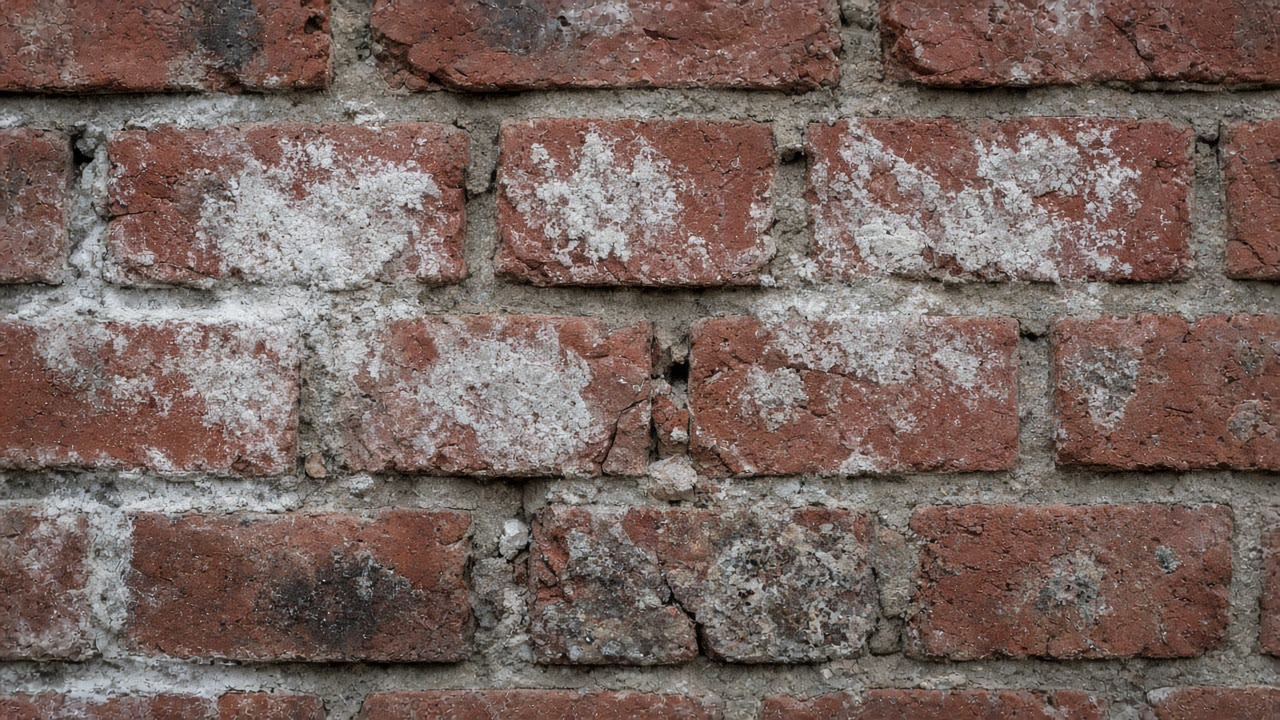
We have not written Manlius a full brick replacement page, because the town's own numbers do not support one. The village is 10.5 percent pre-1940 and the town 11.2 percent, with 50.9 percent of the village built across the 1960s and 1970s, so the soft old brick that a hard mortar destroys is a small minority here. Where it does exist it matters a great deal, because the Manlius Village Historic District carries 50 contributing buildings and replacing repairable historic material is exactly what that standard tells you not to do.
Inside the district, repair comes before replacement
On a contributing address the guidance is explicit: all projects have to be approved before work begins, replacing repairable historic material is never recommended, and damaged historic material should be replaced in kind. So the job is sorting rather than ordering, and the sorting usually shrinks the work. Outside the district, on a house from the 1960s or 1970s, failed units almost always have a local cause, and finding the sill, gutter or grade feeding them costs less than replacing brick twice.
The district standard says repair first
New York's preservation office states that all projects must be approved before work begins, that replacing repairable historic material is never recommended, and that damaged historic material should be replaced in kind. On a contributing building that shapes the scope before anybody prices a single unit.
Only one house in ten here is old enough
Manlius village is 10.5 percent pre-1940 on a median of 1968, and the town 11.2 percent on a median of 1972. Against Skaneateles village at 54.3 percent or East Syracuse at 54.0, this is not soft historic brick country, and a page claiming otherwise would be selling a story.
Two units, or a whole elevation?
Send the Manlius address with a photograph from across the street. The extent tells us which conversation this is.
The Manlius masonry worth looking at instead
Failed brick: what Manlius owners should ask
Our 1970s Manlius house has two crumbling bricks. Is that the start of something?
Probably not. On stock that age, a couple of failed units almost always has a specific local cause: a sill that has lost its slope, a downspout discharging against the wall, or splash off a hard surface. Deal with that and the brick is a small repair rather than a spreading problem. What would change the answer is faces coming off across a whole elevation, which is worth photographing from across the street.
Do you take on brick replacement in the Manlius district?
Yes, and there the emphasis is on doing less. The standard for a contributing building is that repairable material is not replaced and damaged material is replaced in kind, with the project approved before work begins. So the useful work is sorting the units that genuinely have to come out from the ones that only look tired, and that is a conversation on site rather than a number from a photograph.
Get Manlius brick sorted before anything is ordered
A couple of crumbling units, faces going across a wall: describe it with the address and we will say what is feeding it.