
Two Kinds of Steps in Baldwinsville, Two Different Mixes
Hard stone and soft old brick want opposite mortars, and in this village you can find both inside one block.
Retaining Walls and Steps quote in Baldwinsville
Share a few details so we can confirm coverage and arrange the right next step.
Would you rather talk it through? Call (315) 640-3590, answered 24/7.
$100 off your first job
Credited by us on your first booked job.
- One credit per customer per property, on your first booked job.
- Valid through December 31, 2026.
Mention this offer when you book. Full terms.
Why a Baldwinsville stoop is not a generic job
Ground level masonry in this village comes in two kinds and they want opposite treatment. A hard stone step or a stone pier can carry a strong mortar. Soft old brick cannot, and the federal guidance puts it directly: a mortar strong in compressive strength might be desirable for a hard stone such as granite in a pier holding up a bridge deck, whereas a softer, more permeable lime mortar would be preferable for a historic wall of soft brick. With 20.6 percent of the village built before 1940 and roughly 43 percent since 1980, both sit within a block of each other.
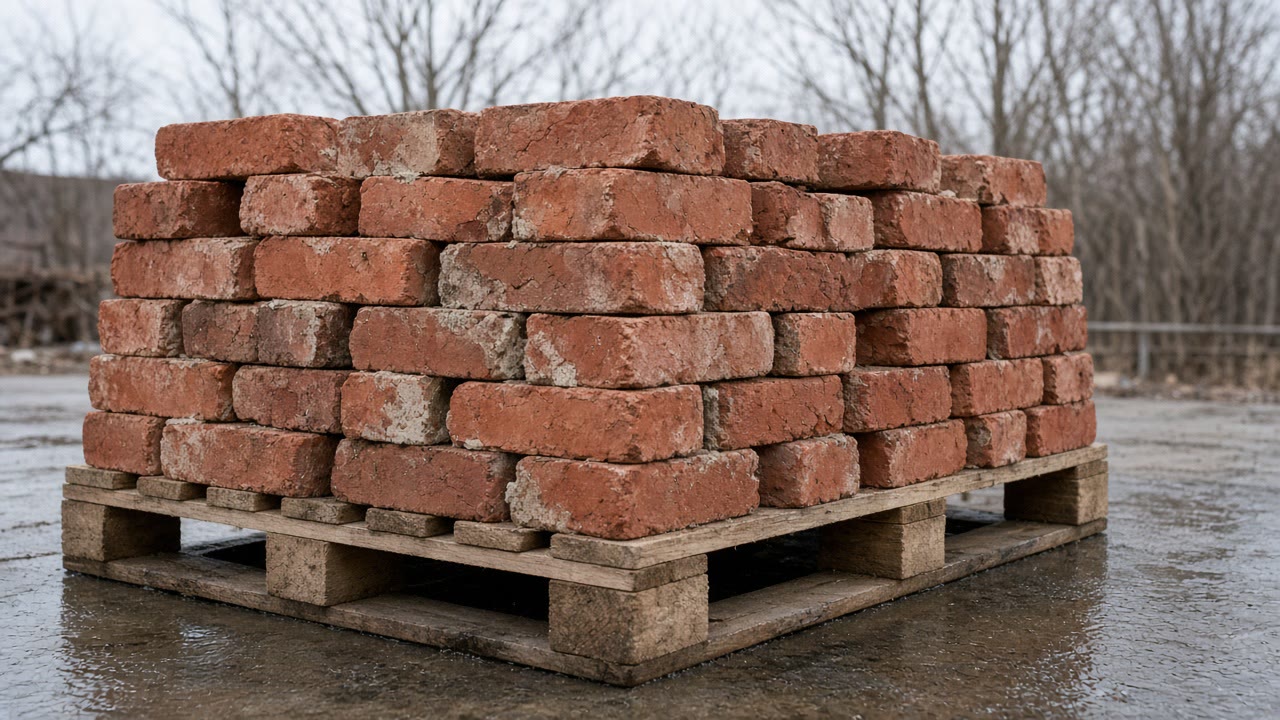
What retaining walls and steps involves
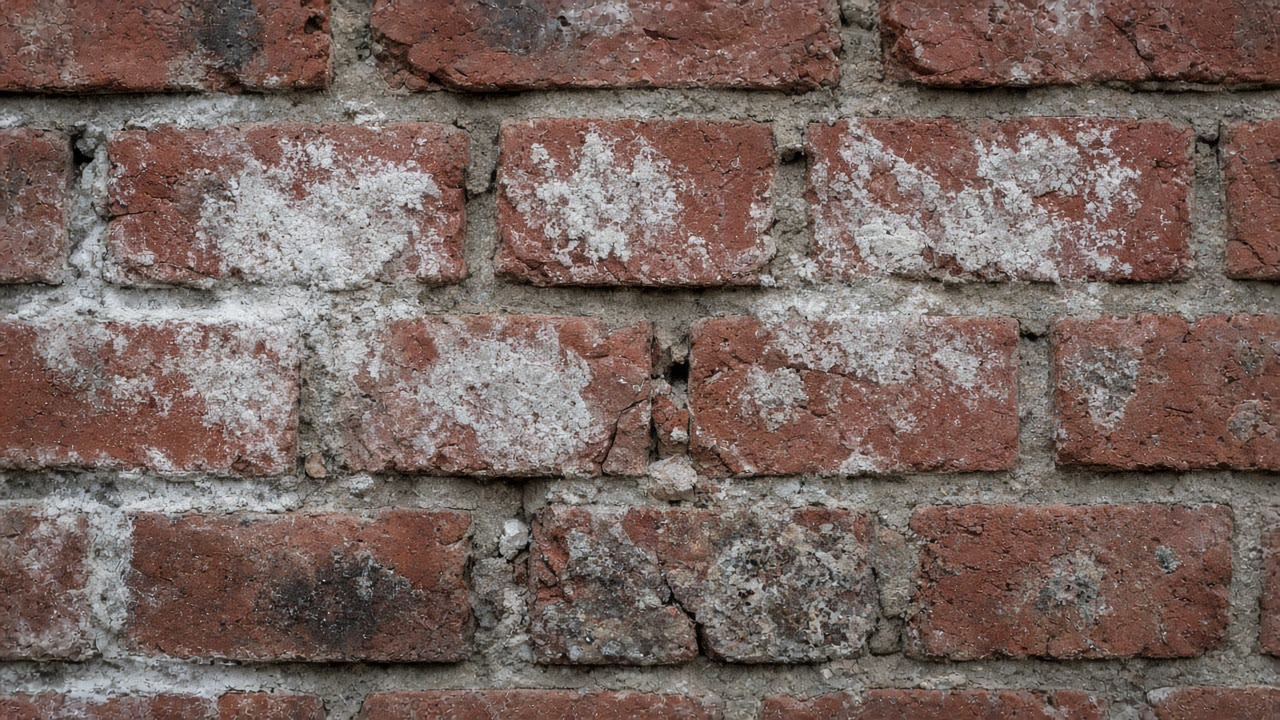
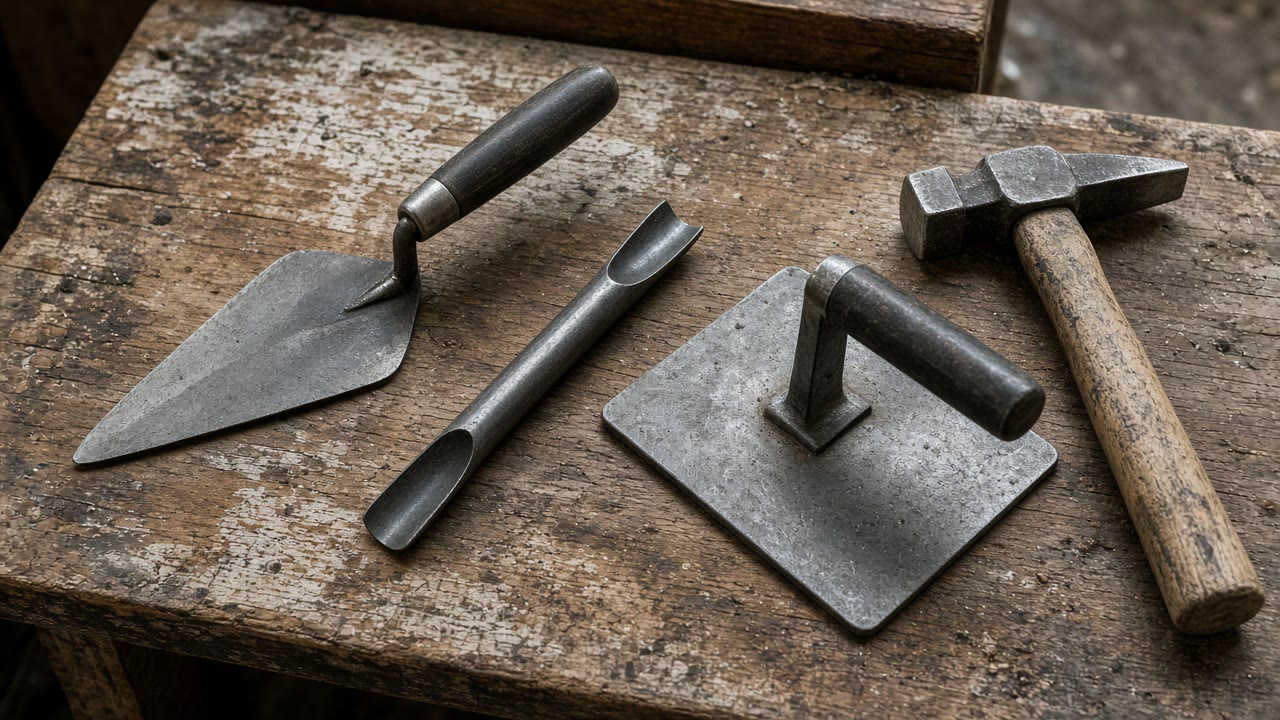
What the material wants, and what the freeze does
Two questions, and the second is the same everywhere. What is the wall or the step actually made of, because the mix follows the material rather than the trade name on the invoice. And how much freezing is acting on it, which here is roughly 84 days a year of crossing the freezing point in both directions rather than one long freeze: 129.5 days with a minimum at or below 32 degrees against only 45.7 that never rise above it. Ground level masonry takes all of those crossings while it is wet, which is why it fails first.
The mix follows the material
The federal guidance makes the trade off explicit: more portland cement gives a harder mortar, more lime a softer and more plastic one. High compressive strength suits a hard stone such as granite in a pier, while a softer more permeable lime mortar is preferable for a historic wall of soft brick with a high vapor transmission rate.
84 crossings a year, at the wettest part of the house
The normals record 129.5 days a year with a minimum at or below freezing and only 45.7 that never rise above it, leaving roughly 84 days of crossing the line in both directions. Steps, stoops and the base of a wall are the wettest masonry you own when those crossings happen.
Both kinds of stock inside one village
Baldwinsville is 20.6 percent pre-1940 with roughly 43 percent built since 1980, on a median of 1975. So a stone stoop from the old core and an engineered block wall from a 1990s street are both ordinary here, and one specification cannot be right for both.
One village, two materials, two mixes
Preservation Brief 2 makes the trade-off explicit. If mixed with higher amounts of portland cement a harder mortar is obtained, and the more lime that is added the softer and more plastic the mortar becomes, increasing its workability. A mortar strong in compressive strength might be desirable for a hard stone such as granite in a pier holding up a bridge deck, whereas a softer, more permeable lime mortar would be preferable for a historic wall of soft brick. The Brief adds that masonry deterioration caused by salt deposition results when the mortar is less permeable than the masonry unit, and that in a wall of soft bricks with a relatively high vapor transmission rate a soft high lime mortar is necessary to retain sufficient permeability.
Source: National Park Service, Technical Preservation Services, Preservation Brief 2: Repointing Mortar Joints in Historic Masonry Buildings, by Robert C. Mack, FAIA, and John P. Speweik, 1998, accessed 2026-09-10
Under the 1991 to 2020 climate normals for Syracuse, the daily minimum temperature falls to 32 degrees Fahrenheit or below on 129.5 days of a normal year, but the daily maximum stays below 32 degrees on only 45.7 days. The difference, about 84 days a year, is days on which the temperature crosses freezing in both directions rather than staying below it.
Source: NOAA National Centers for Environmental Information, 1991-2020 US Climate Normals, station USW00014771 Syracuse Hancock International Airport, accessed 2026-09-10
Baldwinsville village has 3,784 housing units with a median year of construction of 1975, a pre-1940 share of 20.6 percent and 17.3 percent built between 1940 and 1959, so 56.7 percent of the village predates 1980. Marcellus village has 1,031 units, a median of 1952, a pre-1940 share of 38.4 percent and 81.5 percent built before 1980, and the Town of Marcellus around it has 2,789 units, a median of 1963 and a pre-1940 share of 31.8 percent.
Source: US Census Bureau, American Community Survey 2020-2024 5-year estimates, table B25034 Year Structure Built and table B25035 Median Year Structure Built, accessed 2026-09-10
Stone, brick, or both?
Send the Baldwinsville address and say what the steps and walls are made of. The material picks the mix.
Other Baldwinsville masonry at ground level
Steps and walls: what Baldwinsville owners ask
Can the same mortar be used on our stone steps and our brick porch?
It can be, and it should not be. The published position is that a mortar strong in compressive strength suits hard stone while a softer, more permeable lime mortar suits soft brick, so using one mix across both means one of them is getting the wrong answer. In practice that shows up years later as either failed joints on the stone or failed faces on the brick. Ask for each element to be specified rather than for the job to be specified.
Our steps look fine in autumn and terrible in spring. Why?
Because the damage happens in between. Syracuse records 129.5 days a year with a minimum at or below freezing but only 45.7 that stay below all day, which leaves roughly 84 days when the temperature crosses the line in both directions. Every one of those is a chance for water in a joint or a tread to freeze and expand. Ground level masonry gets the most water and the most crossings, so spring is when you see the whole year's work at once.
Get each Baldwinsville element specified
Stone joints washing out, brick treads losing faces, a wall leaning: describe it with the address, no obligation.