
Replacing Brick in Camillus Village and Fairmount Veneer
Two different failures wear the same name here: an old wall losing its faces, and a veneer losing units around an opening.
Brick Replacement quote in Camillus
Share a few details so we can confirm coverage and arrange the right next step.
Would you rather talk it through? Call (315) 640-3590, answered 24/7.
$100 off your first job
Credited by us on your first booked job.
- One credit per customer per property, on your first booked job.
- Valid through December 31, 2026.
Mention this offer when you book. Full terms.
What Camillus has listed, and what improper pointing does
Camillus village has 771 housing units with a median year of construction of 1958 and a pre-1940 share of 32.2 percent. The Town of Camillus around it has 11,481 units, a median of 1966 and a pre-1940 share of 6.1 percent, so the village's prewar share is more than five times the town's. Fairmount, the largest census place inside the town, has 4,569 units, a median of 1961, a pre-1940 share of just 5.0 percent and 38.9 percent of its stock built in the 1950s alone.
Source: US Census Bureau, American Community Survey 2020-2024 5-year estimates, table B25034 Year Structure Built and table B25035 Median Year Structure Built, accessed 2026-09-10
The National Park Service page on common problems with brick masonry states that all too often more damage is done to historic brick buildings with improper pointing than with almost any other treatment, and that the damage is not only cosmetic. It states that care must be taken to match the properties of the existing mortar, naming color, hardness and permeability, and that hard mortars, meaning those with high concentrations of portland cement, are less permeable than the surrounding brick and, with both differential movement and differences in moisture permeability, will often cause the surrounding masonry to deteriorate or deteriorate faster.
Source: National Park Service, Common Problems with Brick Masonry, accessed 2026-09-10
The same National Park Service records list village historic districts across the metro: the Skaneateles Historic District with 59 contributing buildings, the Manlius Village Historic District with 50, the Genesee Street Hill and Limestone Plaza Historic District in Fayetteville with 40, and the Oswego-Oneida Streets Historic District in Baldwinsville with 32. Individual listings outside districts include the Lucius Gleason House in Liverpool, the Solvay Public Library, the Dan Bradley House and the Tefft-Steadman House in Marcellus, five listings at Camillus including the Wilcox Octagon House and the Camillus Union Free School, and the Stone Arabia School in Cicero.
Source: National Park Service, Cultural Resources geospatial data, National Register of Historic Places points and polygons map service, queried for Onondaga County, New York, accessed 2026-09-10
Two kinds of failed brick under one town name
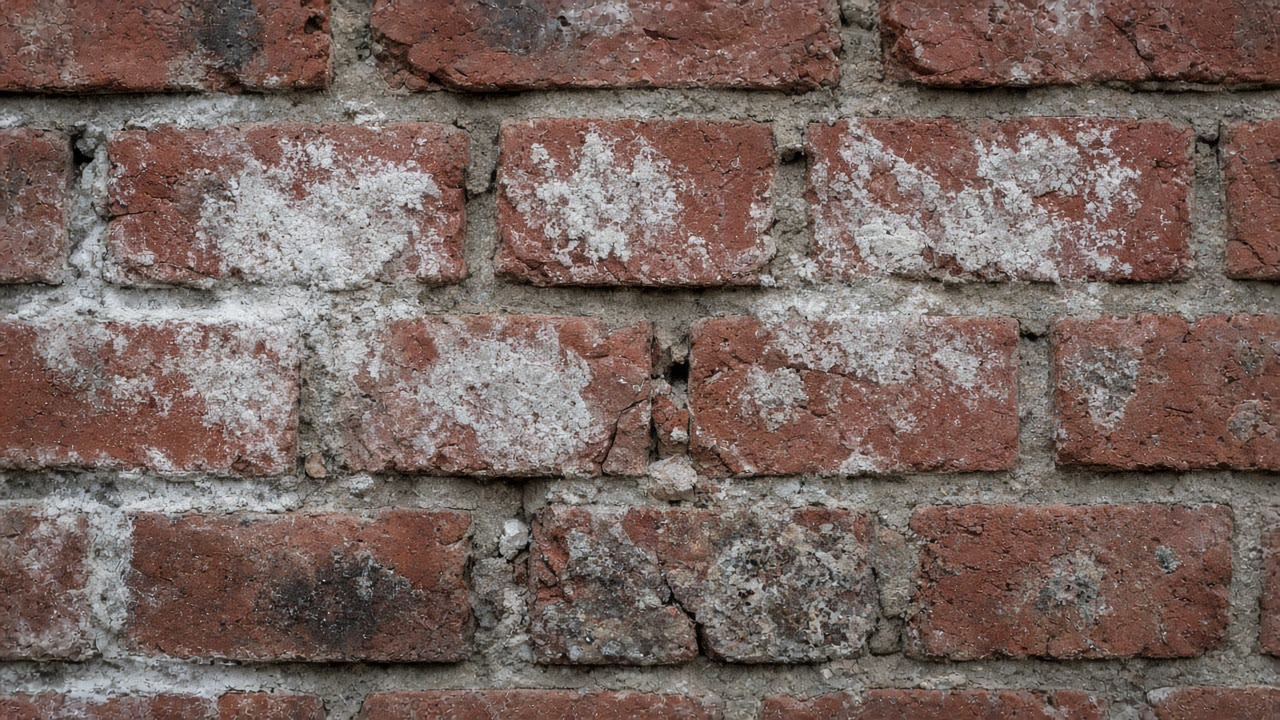
Brick replacement means two different jobs across Camillus. In the village, on the 32.2 percent built before 1940, it is spalled faces on soft brick, usually where a hard pointing job stopped the wall breathing: the National Park Service states that hard mortars with high concentrations of portland cement are less permeable than the surrounding brick and will often make the masonry around them deteriorate faster. Out in the town and in Fairmount it is a handful of units around an opening, taken out because the steel underneath swelled. Same trade name, different cause, different fix.
Is this the mortar's fault, or the steel's
Work out which failure you have before anyone prices units, because the second half of the job is different in each case. If faces are popping across an elevation with no pattern around the openings, a hard mortar or a coating is the cause and the specification has to change along with the brick. If the failed units sit in an arc over a window, a door or the garage, the steel below them is the cause and replacing the brick without dealing with the angle is a countdown. The tell is the pattern, and the pattern shows up in a photograph taken from across the street.
Improper pointing does more damage than almost anything
The National Park Service states that all too often more damage is done to historic brick buildings with improper pointing than with almost any other treatment, that the damage is not only cosmetic, and that hard mortars with high portland cement content are less permeable than the surrounding brick and often make it deteriorate faster.
The pattern names the cause
Scattered failures spread over a whole elevation point at the wall as a system: mortar, coating or water arriving from above. Failures concentrated in an arc over one opening point at what is spanning that opening. You can sort those two from the sidewalk before anybody quotes.
Nothing here is a district, and five buildings are listed
The National Register records five listings at Camillus, including the Wilcox Octagon House and the Camillus Union Free School, all individual rather than a district. So no district wide standard applies to an ordinary house, and what governs the replacement is the specification you agree to.
Scattered faces, or an arc over an opening?
Send the Camillus address with a photograph from across the street. The pattern tells us which of the two jobs this is.
Other Camillus work priced with brick replacement
Failed brick: what Camillus owners ask
Bricks are coming loose in an arc over my Fairmount window. Is that the brick failing?
No, and that arc is the most useful clue on the house. Units failing in a curve over an opening are being pushed by something below them, and in a house of that era it is the steel angle spanning the opening. Replacing the brick and leaving the angle means doing this again, so an honest scope includes establishing what is left of the steel first. Photograph the opening square on from about fifteen feet back so the whole head and the courses above it are in frame.
Our village brick has gone sandy where somebody pointed it years ago. Is that connected?
Very likely. The federal guidance says more damage is done to historic brick by improper pointing than by almost any other treatment, and that hard mortars with high portland cement content are less permeable than the brick around them, which makes the surrounding masonry deteriorate faster. So the failed units come out and the pointing specification changes at the same time. Otherwise the new brick goes back into the same trap the old brick died in.
Get the cause named before units are ordered
Popped faces, loose units over a window, brick gone sandy beside old pointing: describe it with the address, no obligation.