
Replacing Brick in Solvay After the Skin Has Gone
Once the hard fired skin is off a brick the soft core drinks water, and that is the point where a unit has to come out.
Brick Replacement quote in Solvay
Share a few details so we can confirm coverage and arrange the right next step.
Would you rather talk it through? Call (315) 640-3590, answered 24/7.
$100 off your first job
Credited by us on your first booked job.
- One credit per customer per property, on your first booked job.
- Valid through December 31, 2026.
Mention this offer when you book. Full terms.
Solvay at 43.1 percent, and what blasting leaves behind
Ranked by the share of housing built in 1939 or earlier, the places of Onondaga County spread very widely: Skaneateles village 54.3 percent, East Syracuse village 54.0, Liverpool village 50.2, Solvay village 43.1, the City of Syracuse 43.1, Marcellus village 38.4, Skaneateles town 36.6, Camillus village 32.2, Marcellus town 31.8, Baldwinsville village 20.6, Fayetteville village 20.7, DeWitt town 18.7, North Syracuse village 14.9, Salina town 14.5, Manlius town 11.2, Cicero town 6.9, Camillus town 6.1 and Clay town 3.2.
Source: US Census Bureau, American Community Survey 2020-2024 5-year estimates, table B25034 Year Structure Built and table B25035 Median Year Structure Built, accessed 2026-09-10
Preservation Brief 2 sets out the second route to damage, which is moisture rather than stress. Historically mortar acted as a bedding material, not unlike an expansion joint, rather than as a glue, and moisture was able to migrate out through the mortar joints rather than through the masonry units. High lime mortars are more permeable than denser cement mortars. When moisture evaporates from masonry it deposits soluble salts either on the surface as efflorescence or below the surface as subflorescence. Salts left on the surface are usually relatively harmless, but salt crystallization within a masonry unit creates pressure that can cause parts of the outer surface to spall off or delaminate. The Brief concludes that if the mortar does not permit moisture or moisture vapor to migrate out of the wall and evaporate, the result will be damage to the masonry units.
Source: National Park Service, Technical Preservation Services, Preservation Brief 2: Repointing Mortar Joints in Historic Masonry Buildings, by Robert C. Mack, FAIA, and John P. Speweik, 1998, accessed 2026-09-10
The National Park Service states that a brick wall which has deteriorated to the point of looking unsightly has probably received a treatment that caused the loss of the wearing surface of the brick, and that often the treatment was an abrasive cleaning method such as sandblasting. The blasting operation causes the loss of the outer, hard surface of the brick, exposing the softer core. Water, which the page calls the most destructive force on historic masonry surfaces, can then wick into the brick cores, and in a northern climate where winter freezes are prevalent this will cause the brick to deteriorate through freeze-thaw action.
Source: National Park Service, Common Problems with Brick Masonry, accessed 2026-09-10
What took the surface off a Solvay wall
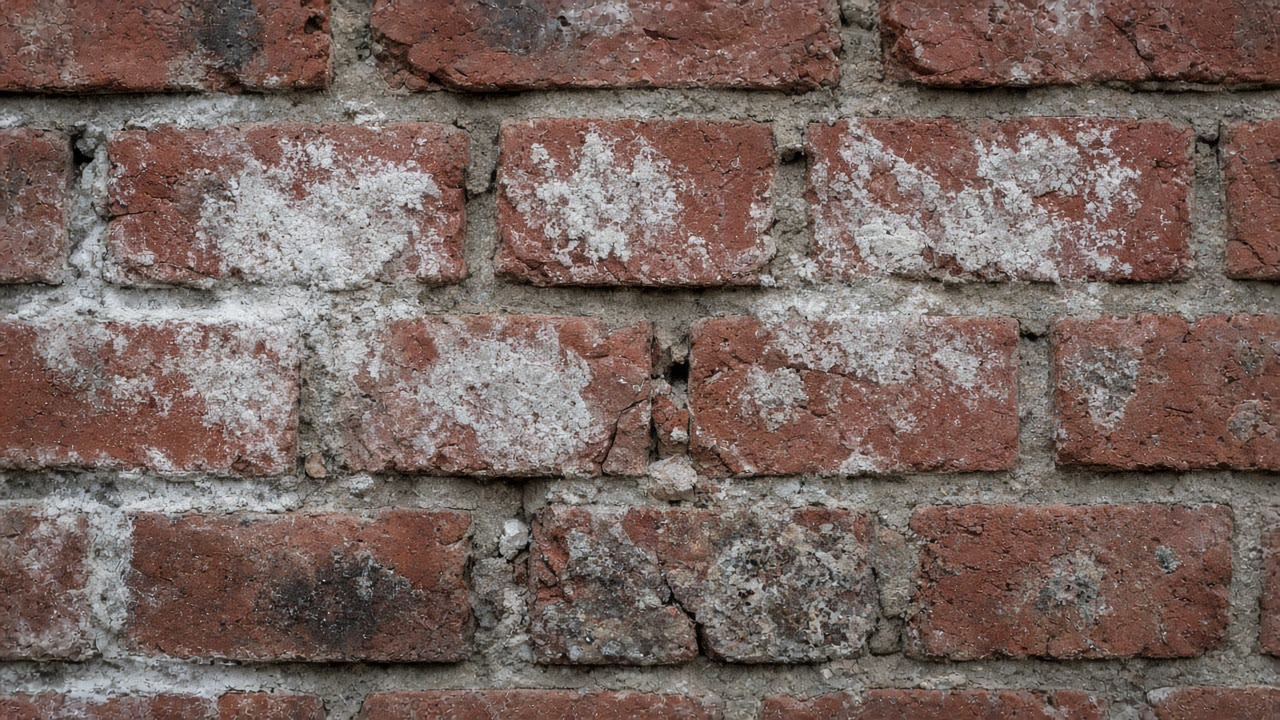
Brick has a hard fired outer skin and a softer core, and replacement becomes the only honest answer once the skin has gone. Two things take it off around here. One is a dense mortar that stops the wall breathing, so moisture leaves through the face instead and salt crystallising below the surface pops it away. The other is abrasive cleaning: the National Park Service is direct that a wall deteriorated to the point of looking unsightly has probably been blasted, and that in a northern climate the exposed cores then break down through freeze and thaw. Solvay is 43.1 percent pre-1940, so the brick here is the soft kind that either route ruins.
How many units, and what stops it happening again
Two numbers come before any price: how many units have actually failed, and how much of the elevation is still sound. Scattered popped faces are cut out and replaced one at a time. A whole blasted elevation is a different conversation, because the brick that looks acceptable today has the same exposed core as the brick that has already gone. On a village house that usually means doing the worst wall properly, changing the mortar specification while the scaffold is up, and watching the rest for a season instead of replacing everything at once.
Salt under the surface is what pops it
When moisture evaporates out of masonry it leaves salts on the surface as efflorescence or below it as subflorescence, and salt crystallising inside a unit creates pressure that spalls or delaminates the outer face. Surface salts are mostly harmless. The ones underneath are the ones taking your brick.
Blasting is a cause, not a cure
The federal guidance says a brick wall that has deteriorated to looking unsightly has probably been abrasively cleaned, losing the hard outer surface and exposing the softer core, and that water then wicks in and freeze and thaw does the rest. Nobody should be offering to blast this wall clean.
Change the bedding when you change the brick
New units bedded into the same hard mix, on the same elevation, fail the same way the last ones did. The specification is the part of this job with a long payback and it belongs in the contract as a named mortar type rather than a promise to match the color.
Scattered faces, or a whole elevation?
Send the Solvay address with a wide photograph of the worst wall. The extent is what decides the approach and the price.
Work usually priced alongside Solvay brick replacement
Spalled brick questions from Solvay
Someone blasted this house before we bought it. Is the brick finished?
Not necessarily, and it deserves a look rather than a panic. Blasting removes the hard outer surface and exposes the softer core, and in this climate those cores then break down through freeze and thaw. In practice that means the wall will need units replaced over time rather than all at once, and that keeping water off it matters more than it would on an unblasted wall. Gutters, sills and joints first, brick as it goes.
Is it cheaper to paint over failing brick than to replace it?
Cheaper today and more expensive later, and we will say so before quoting. Paint covers the symptom while the wall still has to get rid of the water inside it, and on a Solvay elevation there is a second consequence: once the surface is coated, any joint work becomes regulated work with real dust control attached to it. If the brick is failing, the sequence that actually works is find the water, fix the water, then replace the units.
Have Solvay brick counted before it is priced
Popped faces, crumbling units, a blasted elevation going soft: describe it with the address, no obligation.