
Rusting Lintels Over Solvay's Postwar Openings
Nearly a third of this village went up in the decades of the bare steel angle, and corroding steel does not shrink.
Lintel Repair quote in Solvay
Share a few details so we can confirm coverage and arrange the right next step.
Would you rather talk it through? Call (315) 640-3590, answered 24/7.
$100 off your first job
Credited by us on your first booked job.
- One credit per customer per property, on your first booked job.
- Valid through December 31, 2026.
Mention this offer when you book. Full terms.
The postwar third of Solvay, and what sits over its windows
On one Solvay street you can have two entirely different masonry problems. The prewar 43.1 percent wants a soft mortar. The 31.3 percent built across the 1940s and 1950s has bare steel angles sitting over the windows, the doors and above all the garage, and when that steel corrodes it swells by up to ten times the volume of the metal it consumes. That is what lifts a brick course out of level and steps a crack up from the corner of an opening. A survey that reads the joints and never looks at the tops of the openings has done half the job here.
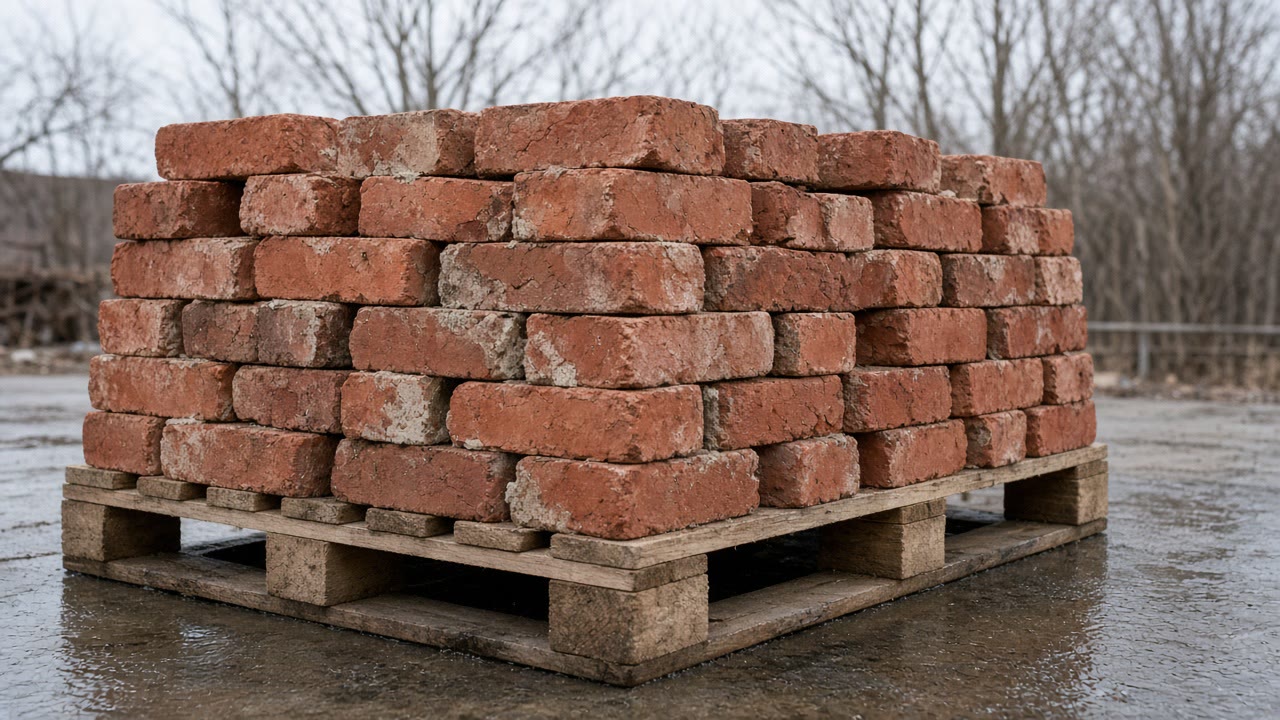
What lintel repair involves
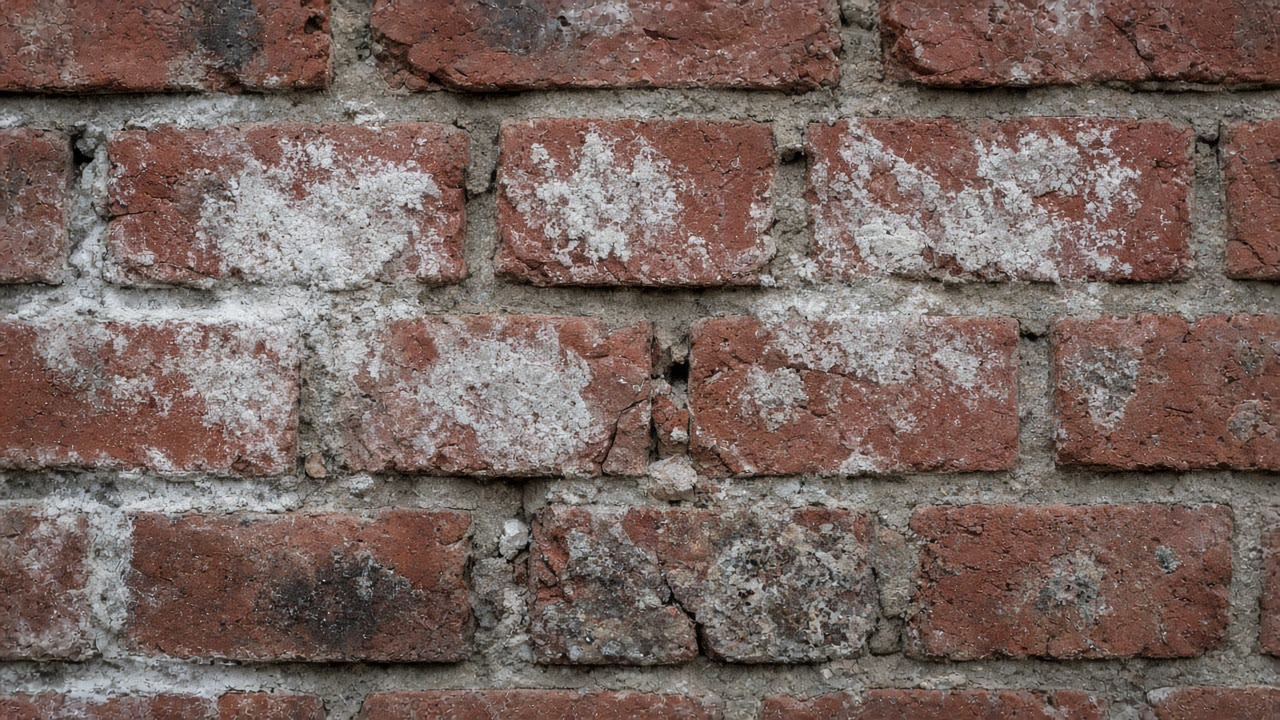

How much steel is left over your opening
The cheap version of this job is cleaning and recoating a lintel that has surface corrosion and no real section loss, and the brick industry's own guidance puts that on the maintenance list: in a harsh climate a lintel that was not galvanized needs periodic attention to avoid corrosion. Almost nobody in this village has been told that. The expensive version starts once the brick above the steel has moved, because then the masonry comes down, the angle comes out and the opening is rebuilt. Put a level on the course above a window and you will know which one you are in.
Rust scale exaggerates the damage
Rust scale can occupy up to ten times the volume of the metal it came from, so a dramatic looking build up does not by itself mean the angle has failed. It also traps moisture against the steel, which is why corrosion accelerates once it starts.
A lintel is a maintenance item
The brick industry states that in harsh climates galvanized steel should be considered for lintels, and that where it is not, the steel will need periodic maintenance to avoid corrosion. Cleaning and recoating sound steel belongs on the same list as the gutters, and it is a fraction of the cost of rebuilding an opening.
Check every opening, not just the one that cracked
In a house of this era the same detail repeats over every opening, so the garage head and the back door are usually on the same schedule as the window that made you call. Having them all looked at once costs less than three separate visits with three separate setups.
43.1 percent prewar, 31.3 percent in the steel decades
Solvay village has 3,292 housing units with a median year of construction of 1947. Of those, 43.1 percent were built in 1939 or earlier, 10.5 percent in the 1940s, 20.8 percent in the 1950s and 8.6 percent in the 1960s, giving 74.4 percent built in 1959 or earlier and 91.4 percent before 1980. That pre-1980 share is the highest of any place in Onondaga County.
Source: US Census Bureau, American Community Survey 2020-2024 5-year estimates, table B25034 Year Structure Built and table B25035 Median Year Structure Built, accessed 2026-09-10
Writing in The Construction Specifier, two engineers from Wiss, Janney, Elstner Associates state that unprotected mild steel oxidizes rapidly when exposed to moisture, that this oxidation produces rust scale which is an iron oxide, and that rust scale can occupy up to 10 times the volume of the original metal. They add that the increased porosity of the corroded surface can trap or hold moisture, leading to further corrosion, and that the forces exerted by corrosion can cause cracking and spalling of adjacent masonry, commonly referred to as rust jacking. The resulting cracks and gaps in the masonry can allow more water into the wall, increasing the potential for further corrosion.
Source: Deborah Slaton and David S. Patterson, AIA, both of Wiss, Janney, Elstner Associates, Expanding on structural steel, Failures column, The Construction Specifier, Construction Specifications Institute, December 7 2018, accessed 2026-09-10
The Brick Industry Association's technical note on structural steel lintels states that the steel for lintels should as a minimum comply with ASTM A36, and that steel angle lintels should be at least one quarter of an inch thick with a horizontal leg of at least three and a half inches for use with nominal four inch thick brick. On maintenance it states that for harsh climates and exposures consideration should be given to the use of galvanized steel lintels, and that if this is not done then the steel lintels will require periodic maintenance to avoid corrosion.
Source: Brick Industry Association, Technical Notes 31B, Structural Steel Lintels, accessed 2026-09-10
Put a level on the course above the window
If it reads level, say so. If it does not, say that. Send the Solvay address either way and we will tell you which job you are in.
Other Solvay work that starts at an opening
Window head questions from Solvay streets
Both my garage openings have a crack at the top corner. Same cause?
Almost certainly, and the garage head is the one to take seriously first because it is the widest span on the house and carries the most brick. The same bare angle sits over both, the same water reaches both, and they corrode on the same schedule. The photograph worth sending is taken standing square to the opening from about fifteen feet back, so the course above the head can be read against the eave line behind it.
The lintel over my window looks rusty but solid. Does it need replacing?
Often not, and that is the answer that saves the most money here. Surface corrosion with the section intact gets cleaned back and recoated, and the brick above it stays exactly where it is. What decides it is how much steel remains once the scale is off, because scale can occupy up to ten times the volume of the metal it grew from and always looks worse than it is. That is a look and measure job rather than a call from a photograph.
Get a Solvay opening measured, not guessed
A step crack, a rust stain, a garage head starting to sag: describe it with the address, no obligation.