
Replacing Veneer Brick and Ties in North Syracuse
A brick veneer is one wythe hanging on ties, so the units are the visible half and the ties are the half that matters.
Brick Replacement quote in North Syracuse
Share a few details so we can confirm coverage and arrange the right next step.
Would you rather talk it through? Call (315) 640-3590, answered 24/7.
$100 off your first job
Credited by us on your first booked job.
- One credit per customer per property, on your first booked job.
- Valid through December 31, 2026.
Mention this offer when you book. Full terms.
Ties, weepholes and the four mortar types
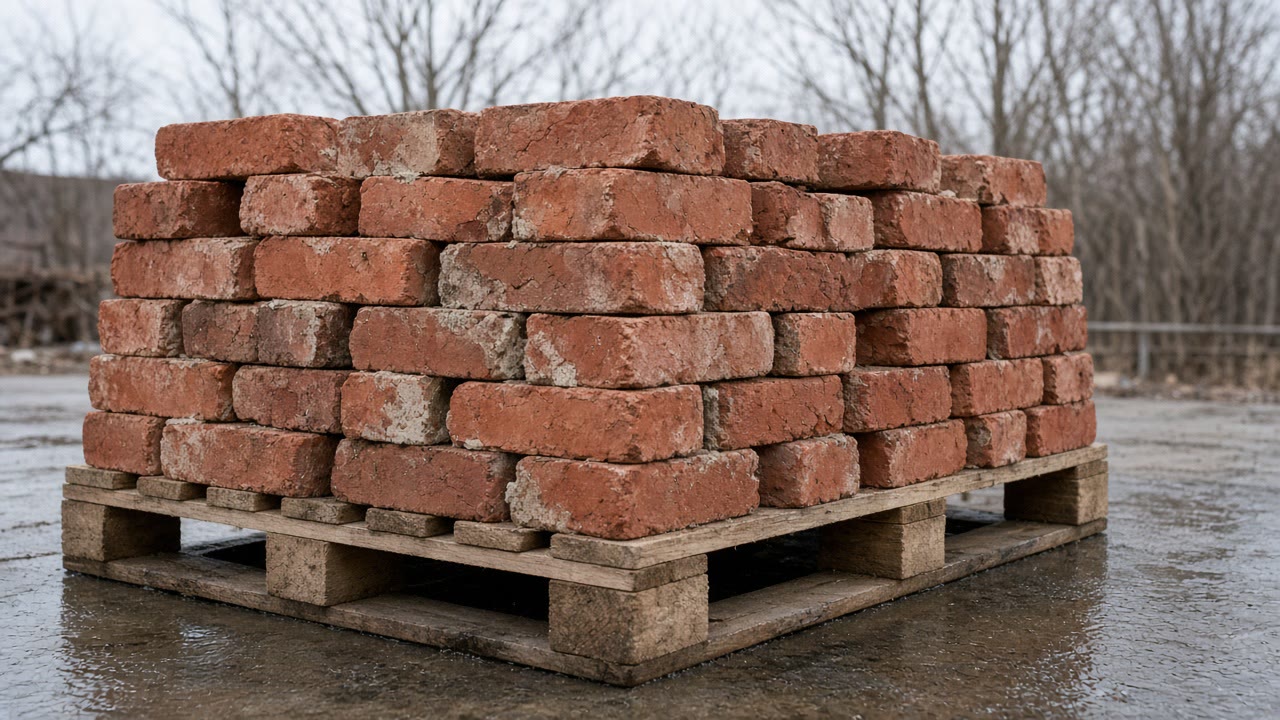
Section R703.8.6 of the Residential Code of New York State requires weepholes in the outside wythe of masonry walls at a maximum spacing of 33 inches on center, not less than three sixteenths of an inch in diameter, located immediately above the flashing. Section R703.8.4.1.1 requires additional metal ties around wall openings greater than 16 inches in either dimension, spaced not more than three feet on center around the perimeter of the opening and placed within 12 inches of it.
Source: 2020 Residential Code of New York State, Section R703, Exterior Covering, via UpCodes, accessed 2026-09-10
The Brick Industry Association reports that masonry mortars are classified by ASTM C270 into four types, M, S, N and O, and publishes the ASTM C270 property specification requirements: a minimum average compressive strength at 28 days of 2,500 psi for Type M, 1,800 psi for Type S, 750 psi for Type N and 350 psi for Type O, with a minimum water retention of 75 percent for all four. Type K, which older preservation literature lists at 75 psi, is not among the four types in current ASTM C270.
Source: Brick Industry Association, Technical Note 8, Mortars for Brickwork, March 2020, reporting the requirements of ASTM C270 Standard Specification for Mortar for Unit Masonry, accessed 2026-09-10
Ranked by the share of housing built in 1939 or earlier, the places of Onondaga County spread very widely: Skaneateles village 54.3 percent, East Syracuse village 54.0, Liverpool village 50.2, Solvay village 43.1, the City of Syracuse 43.1, Marcellus village 38.4, Skaneateles town 36.6, Camillus village 32.2, Marcellus town 31.8, Baldwinsville village 20.6, Fayetteville village 20.7, DeWitt town 18.7, North Syracuse village 14.9, Salina town 14.5, Manlius town 11.2, Cicero town 6.9, Camillus town 6.1 and Clay town 3.2.
Source: US Census Bureau, American Community Survey 2020-2024 5-year estimates, table B25034 Year Structure Built and table B25035 Median Year Structure Built, accessed 2026-09-10
What holds a North Syracuse veneer onto the house
On a postwar house the outer brick is usually a single wythe of veneer tied back to the structure behind it, which changes what brick replacement means. Cutting out failed units is the straightforward part. What has to be right is what goes back with them: ties, and the drainage the veneer was built with. The code wants additional metal ties around any opening greater than 16 inches in either dimension, at not more than three feet on center and within 12 inches of the opening, and weepholes at no more than 33 inches on center immediately above the flashing.
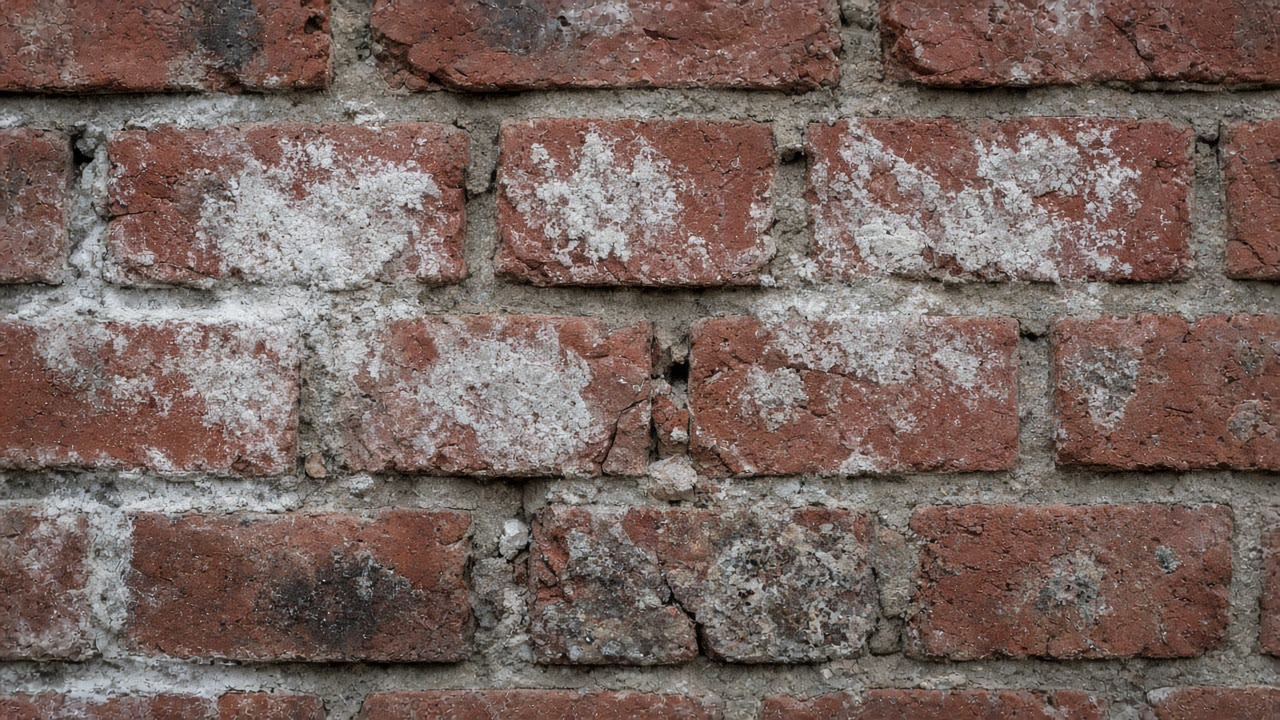
Units, ties, and the mortar they go back in
Three things to agree before work starts. Which units are genuinely failed, because on a veneer a stained unit and a spalled one look similar from twenty feet and only one needs cutting out. What ties go back, especially around an opening, since that is where the code asks for extra. And which mortar, because current standard practice recognizes four types, M, S, N and O, with minimum 28 day compressive strengths of 2,500, 1,800, 750 and 350 psi, and only 14.9 percent of this village is old enough to want the softest end of that range.
Ties and weepholes are specified numbers
The code requires weepholes in the outside wythe at a maximum of 33 inches on center, not less than three sixteenths of an inch across, immediately above the flashing, and additional metal ties around wall openings greater than 16 inches in either dimension, not more than three feet on center around the perimeter and within 12 inches of the opening.
Four mortar types, and yours is probably mid range
Current standard practice classifies mortars as four types, M, S, N and O, with minimum average 28 day compressive strengths of 2,500, 1,800, 750 and 350 psi and a minimum water retention of 75 percent for all four. Type K, which the older preservation literature lists at 75 psi, is not among them.
14.9 percent prewar means most of this is veneer
On the county's prewar ranking North Syracuse sits at 14.9 percent while Skaneateles village leads at 54.3 and Clay trails at 3.2. The soft historic brick this site discusses elsewhere is a minority condition here, and a veneer wall is the normal case.
Loose units, or spalled faces?
Those are two different problems with two different fixes. Send the North Syracuse address and say which you have.
Veneer questions from North Syracuse owners
A few bricks have come loose near the corner of the house. Is that serious?
Worth looking at, because on a veneer loose units usually mean the ties have gone rather than the brick. The outer wythe hangs on metal ties back to the structure, and once those corrode through, sections can start to move as a group. The code asks for extra ties around openings bigger than 16 inches, at no more than three feet on center and within 12 inches of the opening, and a replacement that puts units back without them is cosmetic work.
Can spalled veneer brick from the 1960s be matched?
Usually reasonably well, which is one of the real advantages of a newer house. Sizes and colors from that period are close to current production, so a small patch can settle in within a season or two. What matters more is the bedding: four mortar types are in current use, M, S, N and O, at 2,500, 1,800, 750 and 350 psi minimum at 28 days, and the new units should be bedded in something consistent with the wall rather than whatever is already in the mixer.
Get a North Syracuse veneer checked past the brick
Units loose at a corner, faces spalling, a course starting to bulge: describe it with the address, no obligation.