
Rebuilding the Brick Over a Salina Opening
When brick fails above a window in a postwar house, the failed component underneath usually comes out with it.
Brick Replacement quote in Salina
Share a few details so we can confirm coverage and arrange the right next step.
Would you rather talk it through? Call (315) 640-3590, answered 24/7.
$100 off your first job
Credited by us on your first booked job.
- One credit per customer per property, on your first booked job.
- Valid through December 31, 2026.
Mention this offer when you book. Full terms.
Nothing listed in Salina, and a town built in the 1950s
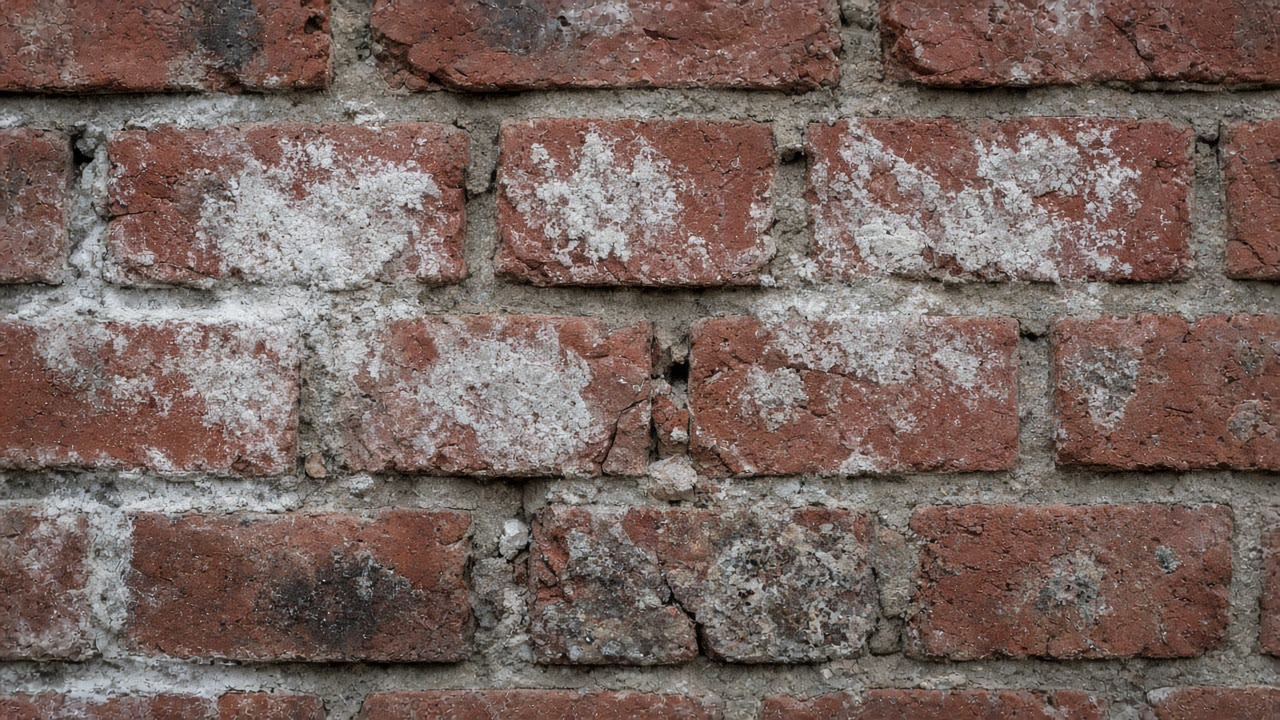
The National Park Service page on common problems with brick masonry lists the corrosion of iron and steel wall reinforcement among the causes of cracking, alongside differential settlement of foundations, drying shrinkage, thermal and moisture expansion and contraction, improper support over openings, the effects of freeze-thaw cycles, expansion of salts, and the bulging or leaning of walls. On openings specifically it states that cracking or displacement of masonry around openings results from the deflection or failure of the lintels or arches that span them, that in older masonry walls with wood lintels cracking occurs as the wood sags or decays, and that iron and steel lintels also cause cracking as they deflect or rust over time. It states that correcting such problems usually means replacing failed components and rebuilding the area around the opening with additional reinforcing.
Source: National Park Service, Common Problems with Brick Masonry, accessed 2026-09-10
Queried for Onondaga County, the National Park Service's National Register points and polygons return 166 records, and none of them is located at Clay, East Syracuse, North Syracuse, DeWitt or Salina. Those five have no National Register listing of any kind in the federal geospatial records: no district, no individual building, no site and no structure.
Source: National Park Service, Cultural Resources geospatial data, National Register of Historic Places points and polygons map service, queried for Onondaga County, New York, accessed 2026-09-10
The Town of Salina has 16,016 housing units with a median year of construction of 1960: 14.5 percent built in 1939 or earlier, 9.8 percent in the 1940s, 25.2 percent in the 1950s and 12.6 percent in the 1960s, so 35.0 percent of the town was built in the two decades from 1940 to 1959. North Syracuse village has 3,072 units with a median of 1959, 14.9 percent pre-1940, and 38.5 percent built between 1940 and 1959. Within Salina the census places of Galeville and Mattydale reach 60.7 percent and 54.6 percent for the same 1940 to 1959 window.
Source: US Census Bureau, American Community Survey 2020-2024 5-year estimates, table B25034 Year Structure Built and table B25035 Median Year Structure Built, accessed 2026-09-10
Why Salina brick replacement centers on the openings
Most brick replacement in this town is not scattered spalling across an elevation, it is a rebuild of the area around an opening. The federal guidance describes the sequence: cracking or displacement of masonry around openings results from the deflection or failure of the lintels or arches spanning them, and correcting it usually means replacing the failed components and rebuilding the area around the opening with additional reinforcing. In a town where 35.0 percent of the housing went up between 1940 and 1959, that is the standard job, and there is no historic credit here to help pay for it.
What comes out, and what goes back with it
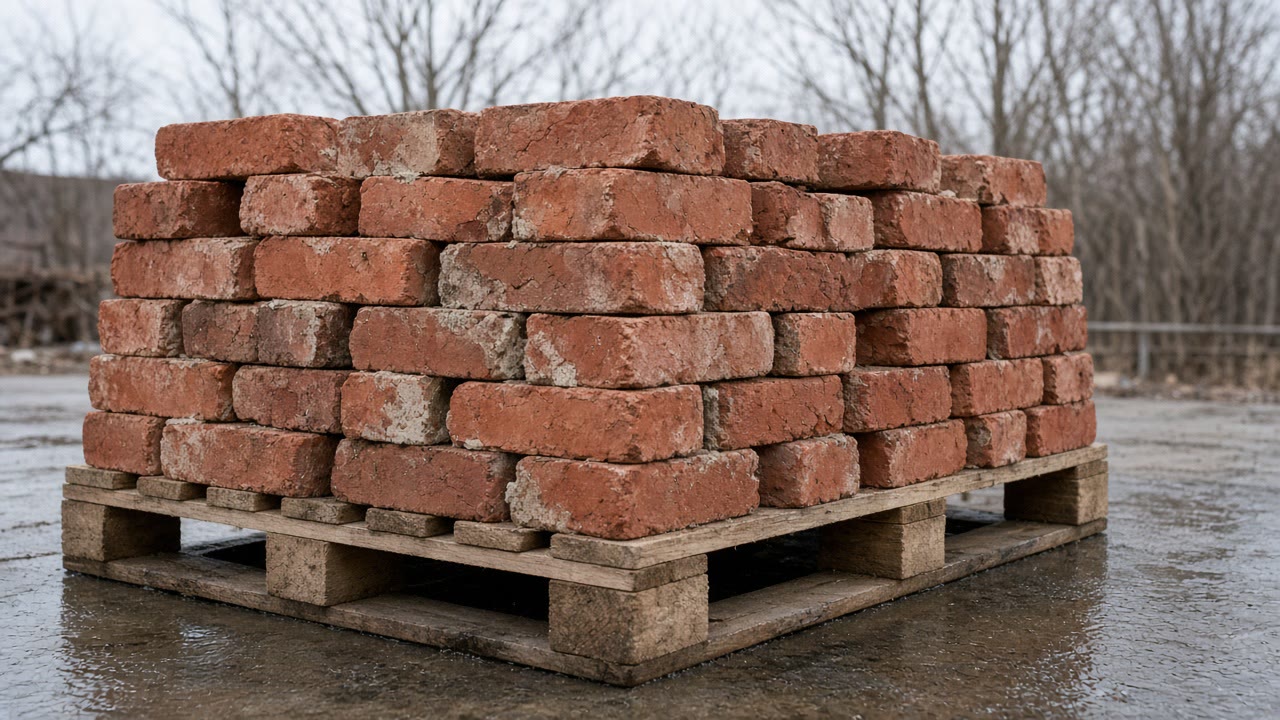
Three things come out of a job like this and all three belong in the scope. The failed units, obviously. The corroded angle, if the measurement says it has lost real section. And the assumption that the brick alone was the problem, because a rebuild that puts units back over the same steel with no flashing and no drainage is a repair with a date on it. Ask what additional ties and what flashing go in, and ask whether sound salvaged brick is being kept for the visible face rather than skipped in favor of the nearest pallet.
The failed component comes out with the brick
The National Park Service states that cracking or displacement around openings results from the deflection or failure of the lintels or arches spanning them, that iron and steel lintels cause cracking as they deflect or rust, and that correcting such problems usually means replacing failed components and rebuilding the area around the opening with additional reinforcing.
There is no credit and no review here
Queried for Onondaga County the National Register returns 166 records and none of them is at Salina, Clay, East Syracuse, North Syracuse or DeWitt. So no historic review applies and no state homeowner credit is available on that basis. The only place to find value on this job is the scope.
Postwar brick is findable, which helps
Salina's median build year is 1960 with 25.2 percent of the town built in the 1950s. Brick from that period is much easier to match than prewar brick, because sizes had standardized, which is one of the few things that is genuinely cheaper about a newer house.
Is the brick failing above an opening?
Send the Salina address with a photograph square on to the window. The pattern over the head tells us what comes out.
Other Salina work that opens up the same wall
Brick replacement questions from Salina
Is brick from the 1950s easier to match than old brick?
Usually yes, and it is one of the genuine advantages of a postwar house. Sizes had standardized and the colors and textures of that period are far closer to what is still made, so a replacement course over a window can read as part of the wall rather than as a patch. It is still worth keeping any sound salvaged units for the most visible face, because nothing matches original brick quite as well as original brick does.
Can we claim a tax credit for masonry work in Salina?
Not on the historic route. Queried for Onondaga County the federal National Register returns 166 records and none of them is located at Salina: no district, no individual building, no site, no structure. So nothing here opens New York's 20 percent homeowner rehabilitation credit, which requires a listed or contributing property in a qualifying census tract. Anyone suggesting otherwise for a Salina address has not checked it.
Get a Salina rebuild scoped past the brick
Units loose over a window, an arc of failed brick, a course lifted out of line: describe it with the address, no obligation.