
Footings, Stoops and Block Walls in Salina
The town's inspection list starts underground, with footings and the foundation wall checked before anything is backfilled.
Retaining Walls and Steps quote in Salina
Share a few details so we can confirm coverage and arrange the right next step.
Would you rather talk it through? Call (315) 640-3590, answered 24/7.
$100 off your first job
Credited by us on your first booked job.
- One credit per customer per property, on your first booked job.
- Valid through December 31, 2026.
Mention this offer when you book. Full terms.
What Salina inspects below ground level
If you are rebuilding a stoop, a porch pier or a retaining wall in this town, the order of work is partly the town's decision. Salina's published inspection sequence starts with footings and the foundation wall, to be checked before backfilling, and runs on through framing, fire separation and a final certificate inspection, with each one requested at least one business day ahead. That matters at ground level because backfill is the step everybody wants to rush. On 16,016 homes with a median build year of 1960, most of the footings in question are postwar and most of them are reachable.
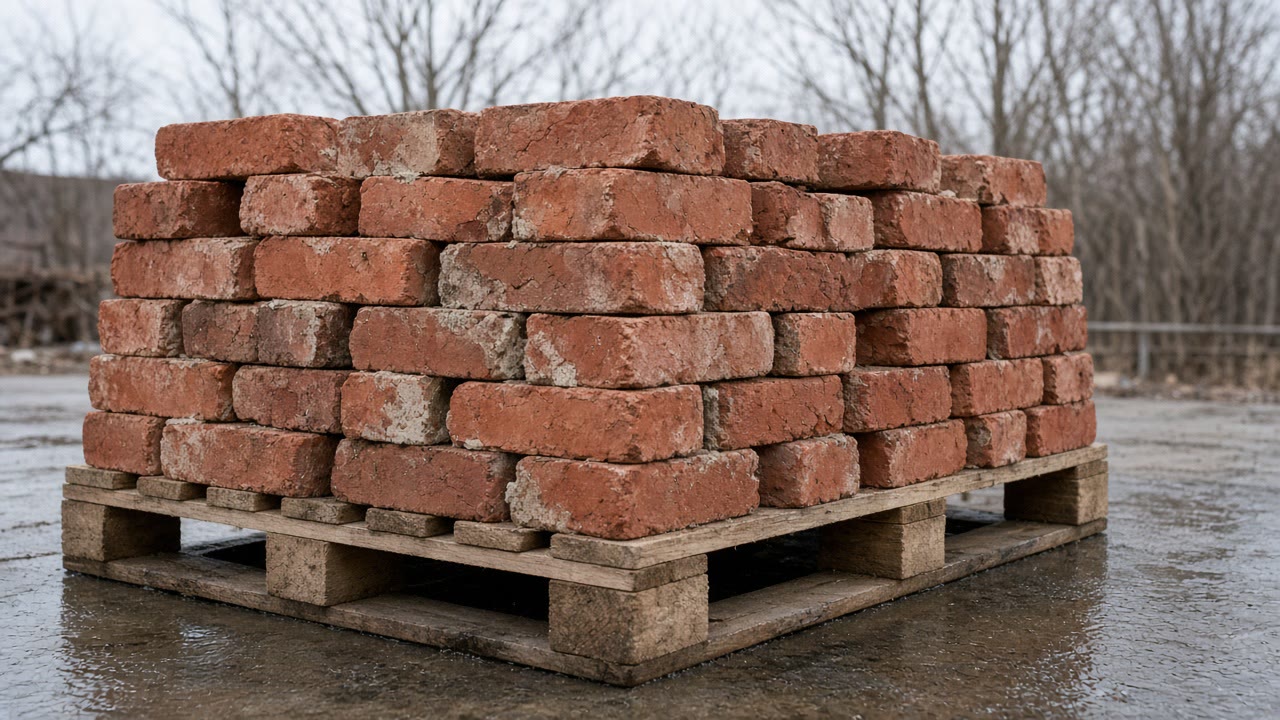
What retaining walls and steps involves


What March does, and what the backfill decides
Two things decide whether ground level masonry lasts here. The first is drainage behind and beneath it, which is settled at the backfill stage and is close to impossible to correct later without taking the wall apart again. The second is the freeze, and March is the month that does it: 17.8 crossings of the freezing point, more than any other month, with 18 inches of snow and a mean temperature of 34.2 degrees, so most of what falls is melting into whatever sits at ground level. A wall built dry in July gets tested properly the following March.
Footings get looked at before backfilling
Salina's published inspection sequence puts footings and the foundation wall before backfilling, ahead of framing before enclosing, fire separation before enclosing and a final certificate inspection, with inspections requested at least one business day in advance. Backfill is the step that buries the evidence, which is why it is inspected first.
March is the real test, not January
The Syracuse normals put 17.8 crossings of the freezing point in March against 11.9 in January, with 18.0 inches of snow, 2.95 inches of precipitation and a mean temperature of 34.2 degrees. Most of what falls in March is melting, which is precisely the condition that opens a joint at ground level.
Postwar footings are usually reachable
Salina has 16,016 housing units with a median build year of 1960 and 25.2 percent built in the 1950s. That generally means poured or block footings at a known depth rather than rubble, which makes a stoop or pier rebuild more predictable to price than the same job on a prewar house.
Footings before backfill, and March as the real test
The Town of Salina publishes the sequence of inspections it requires during construction, and it includes a fireplace and solid fuel burning device inspection to be carried out before insulating or enclosing, alongside footings and foundation wall before backfilling, framing before enclosing, fire protection equipment before enclosing, fire separation before enclosing, and a final certificate inspection on completion. Inspections should be requested at least one business day in advance.
Source: Town of Salina, New York, Department of Planning and Development, Building Permits, accessed 2026-09-10
Broken down by month, the Syracuse normals put the freezing crossings at 11.9 days in January, 13.3 in February, 17.8 in March, 8.7 in April, 3.8 in October, 12.8 in November and 14.7 in December, with March the single worst month of the year. March also carries a normal 18.0 inches of snow and 2.95 inches of precipitation, and a normal mean temperature of 34.2 degrees Fahrenheit, so most of what falls in March is melting.
Source: NOAA National Centers for Environmental Information, 1991-2020 US Climate Normals, station USW00014771 Syracuse Hancock International Airport, accessed 2026-09-10
The Town of Salina has 16,016 housing units with a median year of construction of 1960: 14.5 percent built in 1939 or earlier, 9.8 percent in the 1940s, 25.2 percent in the 1950s and 12.6 percent in the 1960s, so 35.0 percent of the town was built in the two decades from 1940 to 1959. North Syracuse village has 3,072 units with a median of 1959, 14.9 percent pre-1940, and 38.5 percent built between 1940 and 1959. Within Salina the census places of Galeville and Mattydale reach 60.7 percent and 54.6 percent for the same 1940 to 1959 window.
Source: US Census Bureau, American Community Survey 2020-2024 5-year estimates, table B25034 Year Structure Built and table B25035 Median Year Structure Built, accessed 2026-09-10
Has the stoop moved, or just the surface?
Send the Salina address and say whether the gap is widening. That is the line between cosmetic and structural here.
Other Salina masonry at and below grade
Ground level questions from Salina owners
Our stoop has separated from the house. Is that the footing?
Usually, and it is worth knowing before you pay for cosmetic work. A stoop built on shallow fill moves with the frost while the house, on a deeper footing, does not, so the gap opens over years rather than overnight. Rebuilding the visible masonry and leaving what is underneath means the gap comes back. Photograph the joint between the stoop and the house and measure the gap, so you have a number to compare against next spring rather than an impression.
Why does everything look worse in March?
Because March does the damage. The Syracuse normals put 17.8 crossings of the freezing point in March against 11.9 in January, with 18 inches of snow and a mean temperature above freezing at 34.2 degrees, which means most of what falls is melting and refreezing rather than sitting frozen. Water that soaks into a joint in the afternoon and freezes overnight is the mechanism, and March supplies more of those days than any other month of the year.
Get a Salina wall built for next March
A stoop pulling away, a block wall starting to bow, steps dropping at one end: describe it with the address, no obligation.