
The County's Densest Lintel Belt: Galeville and Mattydale
Galeville is 60.7 percent 1940s and 1950s housing and Mattydale 54.6, the two densest concentrations of the steel lintel era in the county.
Lintel Repair quote in Salina
Share a few details so we can confirm coverage and arrange the right next step.
Would you rather talk it through? Call (315) 640-3590, answered 24/7.
$100 off your first job
Credited by us on your first booked job.
- One credit per customer per property, on your first booked job.
- Valid through December 31, 2026.
Mention this offer when you book. Full terms.
Why Galeville and Mattydale top this particular list
If you own a house in Galeville or Mattydale, the crack over your window is the likeliest masonry problem you have. Galeville built 60.7 percent of its housing between 1940 and 1959 and Mattydale 54.6 percent, the top two in Onondaga County on that measure, with the Town of Salina as a whole at 35.0 percent. Those are the decades of the bare steel angle over the window, the door and the garage. The good news is that the diagnosis is cheap and the early repair is cheap. What is expensive is the version where the brick above the steel has already moved.
What lintel repair involves
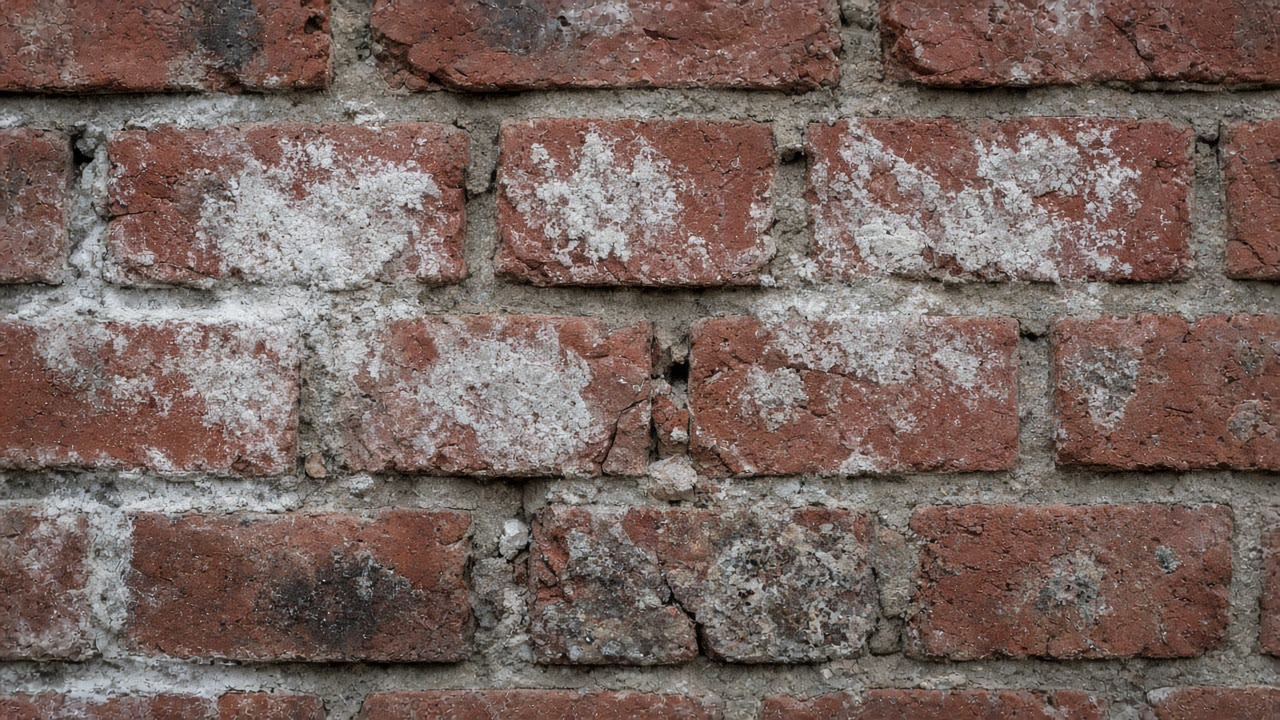

Put a level on the course above the window
One measurement splits the cheap job from the expensive one. Corroding steel does not shrink, it swells, and the measured cases are not subtle: a beam flange that grew from three eighths of an inch to one and five eighths, more than four times its original thickness, and rust jacking that displaced the masonry beside it by three quarters of an inch. Three quarters of an inch lifts a brick course out of level, which is the pattern most people read as the house settling. If the course above your window still reads level, you are probably in cleaning and recoating territory.
The measured cases are the argument
Two published examples make this concrete. A corroded beam flange originally three eighths of an inch thick had expanded to one and five eighths. In another case rust jacking from an expanding corrosion product displaced the adjacent masonry by three quarters of an inch. That is what moves a brick course, and it does not reverse.
Scale is not the same thing as section loss
A significant build up of rust scale is visually alarming and damaging to masonry in contact with it, but does not by itself mean enough metal has gone to make the member inadequate. Section loss of 10 to 20 percent is often cited as the threshold for further assessment, and the scale has to be removed to find out where you are.
Your street is in the densest part of the county for this
On the 1940 to 1959 ranking Galeville leads the county at 60.7 percent and Mattydale sits third at 54.6, with Westvale at 51.3 and Lyncourt at 47.1 nearby. Skaneateles village, by contrast, is 13.1 percent. This is genuinely a local problem rather than a general one.
60.7 percent at Galeville, 54.6 percent at Mattydale
Ranked instead by the share of housing built between 1940 and 1959, the era in which steel angle lintels over openings became standard in brick and brick-veneer houses, the county orders itself completely differently: Galeville 60.7 percent, Seneca Knolls 58.9, Mattydale 54.6, Westvale 51.3, Lyncourt 47.1, Fairmount 42.7, North Syracuse village 38.5, Geddes town 37.1, Salina town 35.0, Solvay village 31.3, Camillus town 30.4, Liverpool village 27.1, Fayetteville village 26.8, East Syracuse village 26.4, DeWitt town 25.6, the City of Syracuse 23.3, Manlius town 22.3, Cicero town 19.7, Baldwinsville village 17.3, Marcellus town 15.1, Skaneateles village 13.1 and Clay town 12.8.
Source: US Census Bureau, American Community Survey 2020-2024 5-year estimates, table B25034 Year Structure Built and table B25035 Median Year Structure Built, accessed 2026-09-10
The same article publishes two measured examples. In one, corrosion of a beam flange advanced to the point where the original 3 eighths of an inch thick flange had expanded to 1 and 5 eighths of an inch, more than four times its original thickness. In another, rust jacking from an expanding corrosion product on a steel beam had displaced the adjacent masonry by 3 quarters of an inch.
Source: Deborah Slaton and David S. Patterson, AIA, both of Wiss, Janney, Elstner Associates, Expanding on structural steel, Failures column, The Construction Specifier, Construction Specifications Institute, December 7 2018, accessed 2026-09-10
The article states that significant accumulation of rust scale, while visually notable and potentially damaging to masonry in contact with the corroding steel, does not necessarily mean enough original material has been lost to render the member structurally inadequate, and that section loss of 10 to 20 percent is often cited as the threshold at which further assessment of the element should be conducted. Where rust scale accumulation is extensive, the corrosion product must be removed to determine the actual section loss, and both the location and the extent of the corrosion decide whether repair or replacement is needed.
Source: Deborah Slaton and David S. Patterson, AIA, both of Wiss, Janney, Elstner Associates, Expanding on structural steel, Failures column, The Construction Specifier, Construction Specifications Institute, December 7 2018, accessed 2026-09-10
Does the course above your window read level?
Check it with a level or a straight edge, then send the Salina address with the answer either way.
Other Salina work that starts over an opening
Window heads: what Galeville and Mattydale owners ask
The brick course over my window is not level. What does that mean?
It usually means the steel under it has been growing. Measured rust jacking cases include masonry displaced by three quarters of an inch, and a beam flange that expanded from three eighths of an inch to one and five eighths, more than four times its original thickness. A lifted course is that expansion showing up where you can finally see it. It also means the cheap version of this repair has passed, because the brick has to come down to get the angle out.
Everyone on my Mattydale street seems to have the same crack. Coincidence?
No, it is the build decade. Mattydale put 54.6 percent of its housing up between 1940 and 1959 and Galeville 60.7 percent, the two highest shares in the county, and houses built in the same years with the same detail over the openings corrode on the same schedule. It is also useful information, because a street where several houses are at the same stage is a street where one visit can look at several openings.
Get a Galeville or Mattydale opening measured
A step crack, a rust stain, a course lifted out of line: describe it with the address, no obligation.